
Particle support
Limit the transport of insoluble powder and decorative particles in static conditions.

Oral care with NatFibra® fiber suspension stabilizer
To improve the distribution of insoluble powders, fragrance microdrops and other dispersive components in continuous aqueous case.
NatFibra® OL is based on NatFibra® fiber from fermentation sources. Fibres are dispersed and interwoven in the liquid phase, providing structural support for particles and droplets.
System viscosity, mobility and oral use are affected by the complete formulation and should be determined in combination with product additions, particle characteristics and processing conditions.
NatFibra® fiber is fermented from sugar sources and cellulose molecular chains are connected by glucose units via β-1,4 glycosidic bond and further assembled as nanofibrils. Higher spect rateo allows material to form more contact points in aqueous case.

Limit the transport of insoluble powder and decorative particles in static conditions.
Improve the spatial distribution of fragrance microdrops or other dispersed droplets in successive aqueous cases.
Establish internal structures and retain the flow status required for liquid systems.
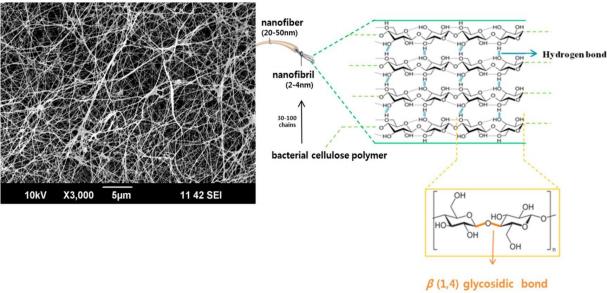
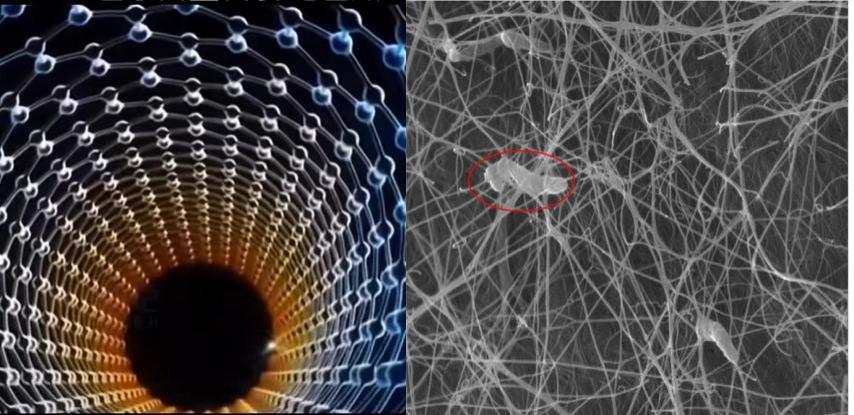
Fragmentation, effective solid content and final product composition are based on current product specifications.
Sugar sources and germs enter the fermentation stage, forming the bio-cellulose.
Elimination of cultures and fermentation residues and acquisition of pure cellulose material.
Material formation based on the use requirements of the dental care liquid system.
Complete formulation, quality indicator recognition and packaging.
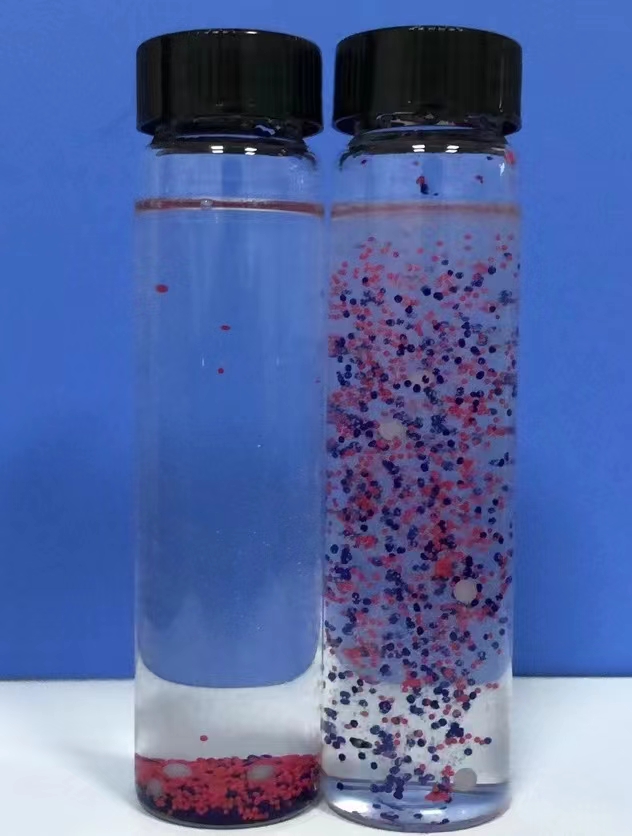
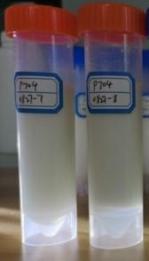
The particles in the left sample are concentrated mainly at the bottom of the container; the particles in the right sample are distributed in the liquid phase. The group did not include basic additions, particle properties, storage temperature and observation time.
The official certification shall be based on the stability of the particle density, particle size, shape and addition, and shall not directly consider the state in the photograph as the result of the shelf period.
The structural effects of the material are not the only mechanism based on the traditional high viscosity, but do not mean that the viscosity of all of it remains unchanged. The practical application window is confirmed by a gradient test.
Recognition of appearance, particle distribution, viscosity, yield condition and storage stability.
Comparison of network structures, particle deposition and liquid droplets before and after salt addition.
Observe the appearance and current state of the heat, high temperatures, low temperatures and high cryogenic cycles.
Validation of the impact of decentralized speed and time on network recovery and the homogeneity of finished products.
Assess the compatibility of perfumes, surfactants, preservatives, sweets and functional components.
It is recommended to record the flows and continuity of Brookefield viscosity, yield condition, touch recovery, flow curves, and during dumping, pumping or ejection.
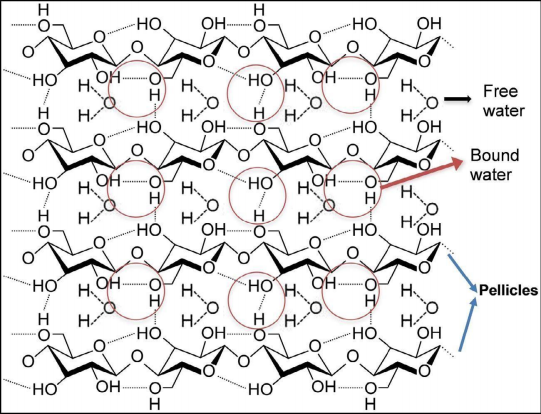
Hydroxyl radicals on cellulose chains form hydrogen keys with water molecules. The pore and continuous network between microfibrils together influence the distribution of water in materials in combination with free water.
The above values correspond to the bio-cellulose material and the corresponding research conditions and are not equivalent to the conclusion of oral wetting or efficacy of the finished NatFibra® OL product.
The NatFibra® fiber of high-aspect-ratio can be distributed over the oil-water area and, together with a continuous three-dimensional network of aqueous phasies, restrict the movement of oil droplets. This structure can be used for decentralized system studies with perfume oil or other oil case components.
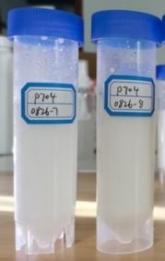
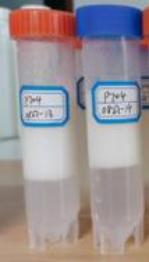
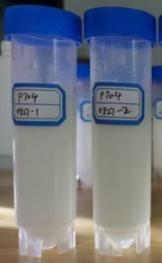
In this model, samples that add more than 10% to NatFibra are marked as stable emulsion. The samples did not show the oil water ratio, average process, storage temperature, observation time and evaluation method, and the graphical concentration did not represent the recommended additions to NatFibra® OL oral care.

Specific product patterns and permitted raw materials should conform to the oral care regulations and product safety requirements of the target market.
For dental care liquids that require control of powder deposition and bottom concentrations.
Liquid systems that require the maintenance of a spatial distribution and appearance of particles.
Water-based dispersion systems for aromatic microdrops or a small amount of oil case.
Formulation for both particle distribution and dumping, pumping or ejection.
The available product information does not give a uniform recommended addition applicable to the entire oral care system. It is proposed to set an addition gradient based on the requirement of a solid content, particle load, droplet ratio, target flow status and stability.
Predispersion, order of additions, cut speed and cut time
Particle density, particle size, shape and addition
Consistency of perfume, surfactants, electrolytes and preservative systems
Force pH, ion strength and processing temperature
Low shear viscosity, yield style, touch recovery and flow curve
Centrifugal, high-temperature, low-temperature, frozen and high-temperature cycle stability
The inner wall of the bag is attached, bottom sedimentation, redispersion and filling.
Microbiological control, preservation challenges and oral exposure safety assessment
Product appearance, effective solid content, finished product pH, microbiological indicators, shelf life, recommended additions and standard additives are based on the latest product specifications and technical documents.