
Aqueous-phase structure
Microfibrils communicate with each other when they are dispersed, forming a continuous network in aqueous case.

Food structural material for particle suspension and Oil-water stability
Microfibrils are scattered after aqueous case and form a continuous network for use in the development of liquid and composite food systems.
CocoCel™ uses sugar as a fermentation material, metabolizes microbially to form cellulose, and acquires microfibril material for foods through purification and product formation.
Microfibrils are interwoven in aqueous case, providing structural support for cocoa powder, spices and other fine particles, and also contributing to Oil-water stability. Actual performance is related to the composition of systems, decentralized phase characteristics, processing conditions and additions.
Sugar sources metabolize by micro-organisms
Remove culture and fermentation residues
Complete material assembly according to food application requirements
Product indicator confirmed packaging
The cellulose molecular chain of NatFibra® fiber is connected by glucose units via β-1,4 glycosidic bond. CocoCel™ uses fibres with a diameter of about 20-40 nm, longer than micrometres, and has a higher spectro.
In vitro cellulose cellulose produced by micro-organisms do not contain semi-cellulose and luminose, which are common in plant cellulose.
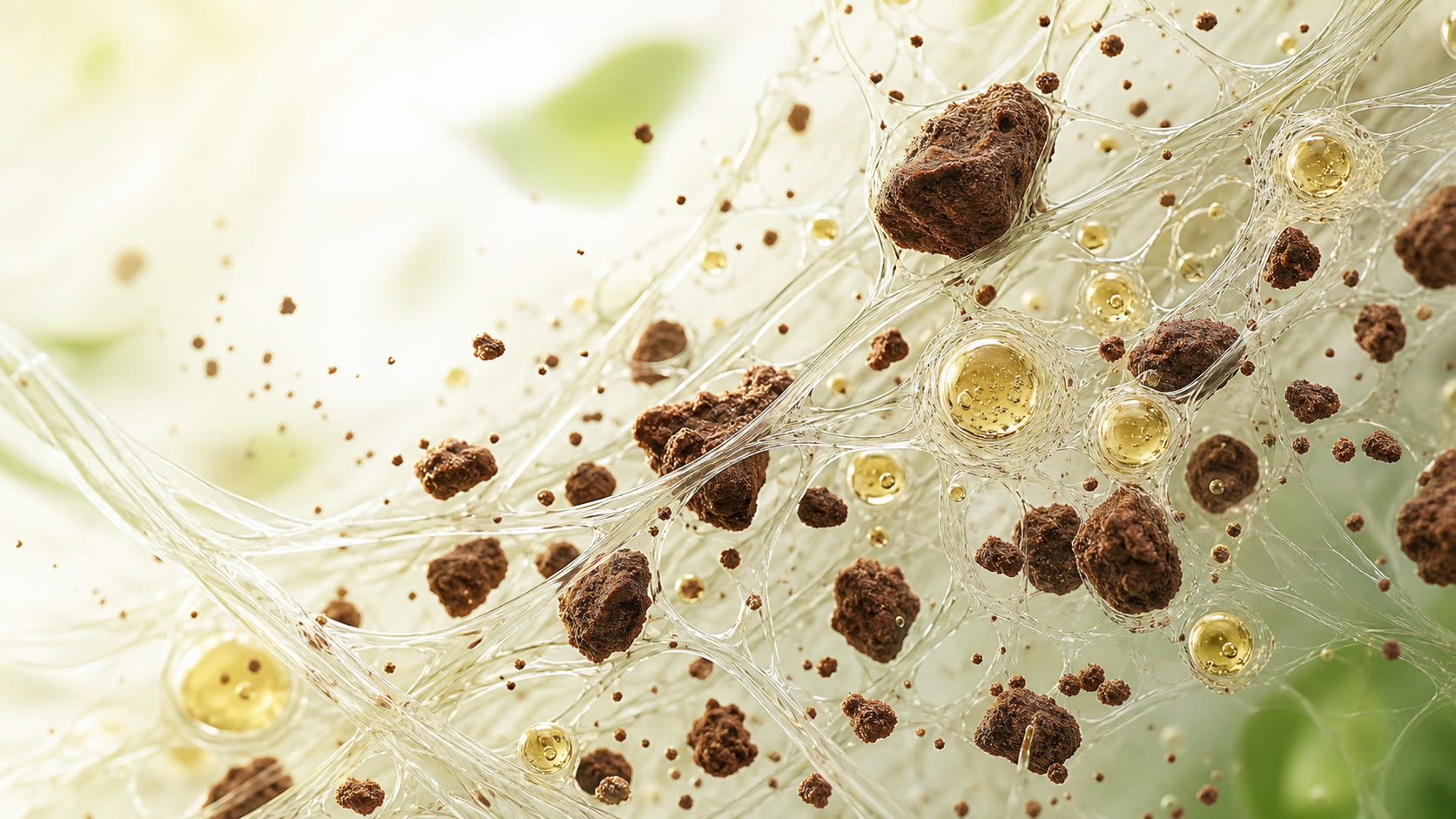
Microfibrils communicate with each other when they are dispersed, forming a continuous network in aqueous case.
Cocoa powder, spices and other fine particles are distributed in cyberspace.
high-aspect-ratio microfibrils can be distributed in the oil drip interface and participate in stable emulsion structures.
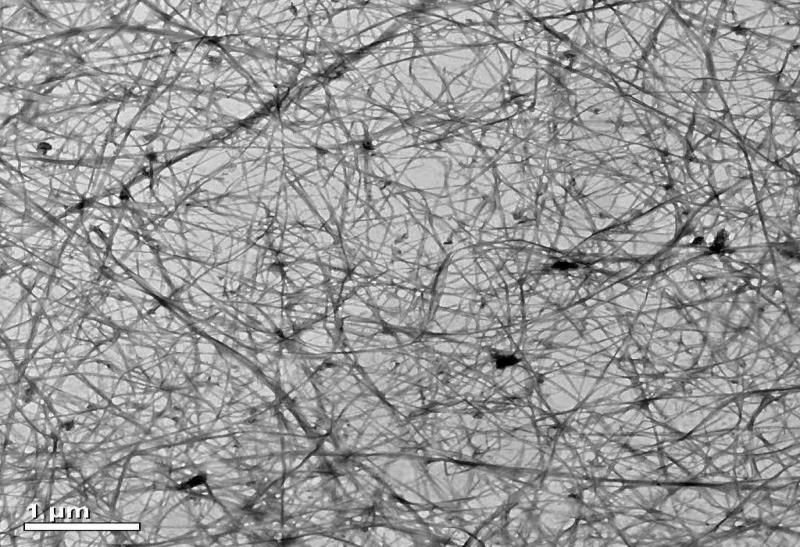
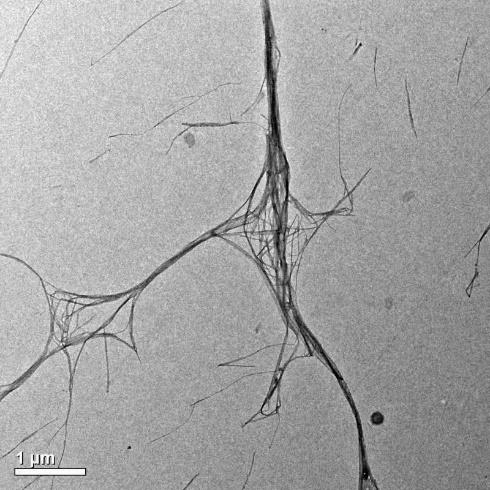
The two types of activity correspond to the particle support within the liquid and the structural stability of the oil-water environment, respectively.
Small particles are distributed within the space of a continuous network of microfibrils and are structurally supported in static settings to reduce deposition or accumulation caused by density differences.
The assessment should examine the low-cut structure, flow state, static stability and taste at the same time.
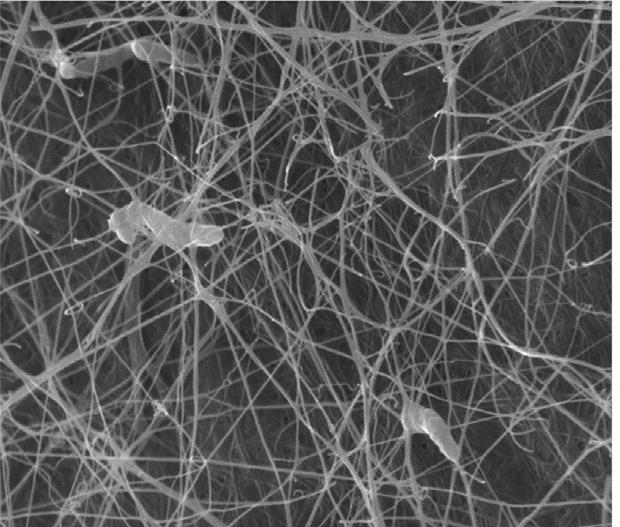
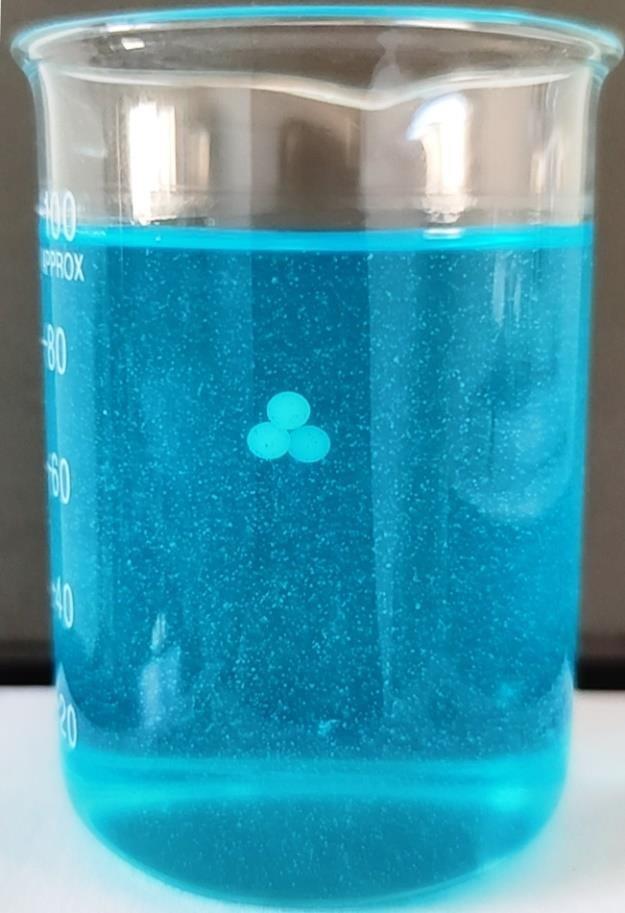
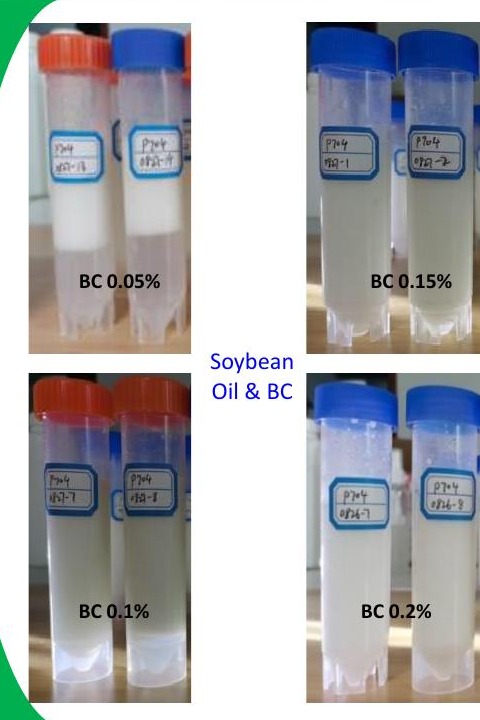
high-aspect-ratiomicofibrils can be distributed over oil-water interface and form particle interfaces around oil droplets for food oils, fragrance oils and other oil case dispersion and stabilization studies.
Test condition: Soybean oil system, by 0.05-0.20% added.
CocoCel™, CMC, xanthan gum, carrageenan and Bioplus Fibrils sample state of emulsion.
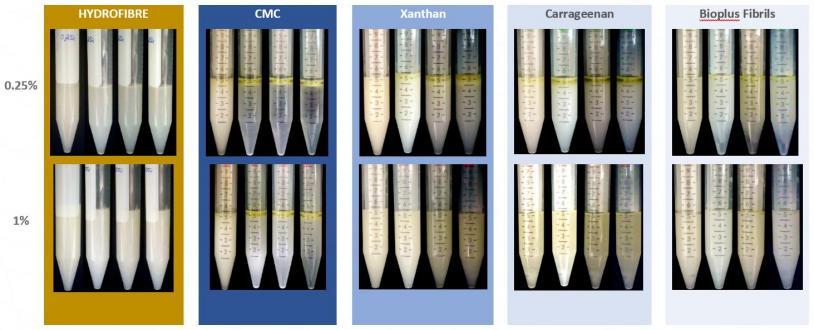
The following results correspond to the conditions of each of the tests, for use in product selection and for the development of a reference for the purpose.
The test log value for CocoCel™ decreased with the addition level.
The records do not contain numerical units, sample preparation conditions and repetitions.CocoCel™ adds 0.1 to 0.15% and room temperature observation nodes 1 hour, 1 day and 15 days.
CocoCel™ samples were recorded as 100 per cent suspended at all three observation points in the paella-creasing cocoa system.

The group compared CocoCel™ with samples of other hydrogels in cocoa milk drinks.
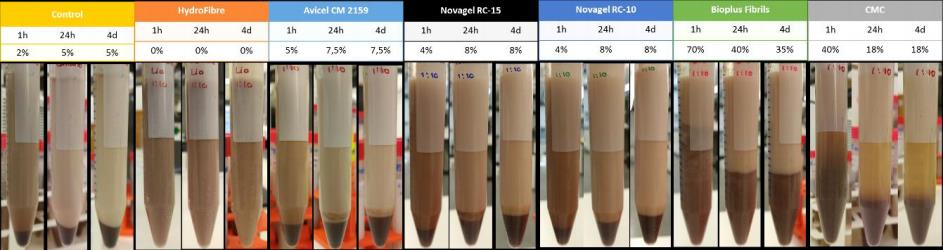
Application recognition should be combined with particle characteristics, oil case ratio, processing process, taste and target shelf periods.
Suspended and even distribution of cocoa powder, fruit meat and other insoluble fine particles.
Dispersion of food oil, flavour oil and other oil case and the development of Pickering emulsion structures.
The fragrance, plant particles and oil case components are dispersed and structurally stable.
Formulation of flour, spices, fragrance oil and other scattered components.


The following values are added levels in the corresponding tests. The end-use should be confirmed under full-formulization and target processing conditions.
Sample appearance observation
Five groups of hydrogels.
Iso-hexadecane/water, suspension method
House temperature observation to 4 days
Parsic milk. Room temperature is 15 days.