Continuous microfibril scaffold
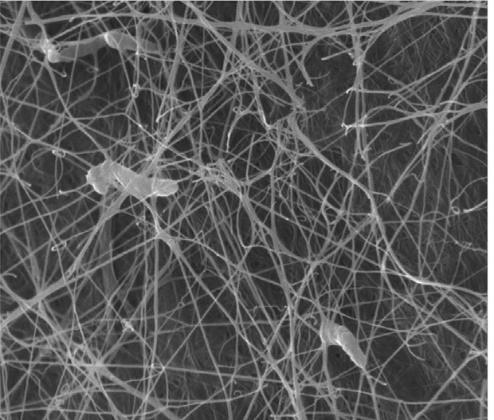
20-40 nm microfibrils are interwoven in aqueous case and participate in the formation of continuous membrane structures.

NatFibra® fiber participation membrane structure, water holding structure and decentralized system construction
The product is dispersed into a continuous network of three-dimensional microfibrils, which can be used to remove thin membranes, water-washed hydrogels and facial maskformation with hyaluronic acid, protein platinum or ceramide components.
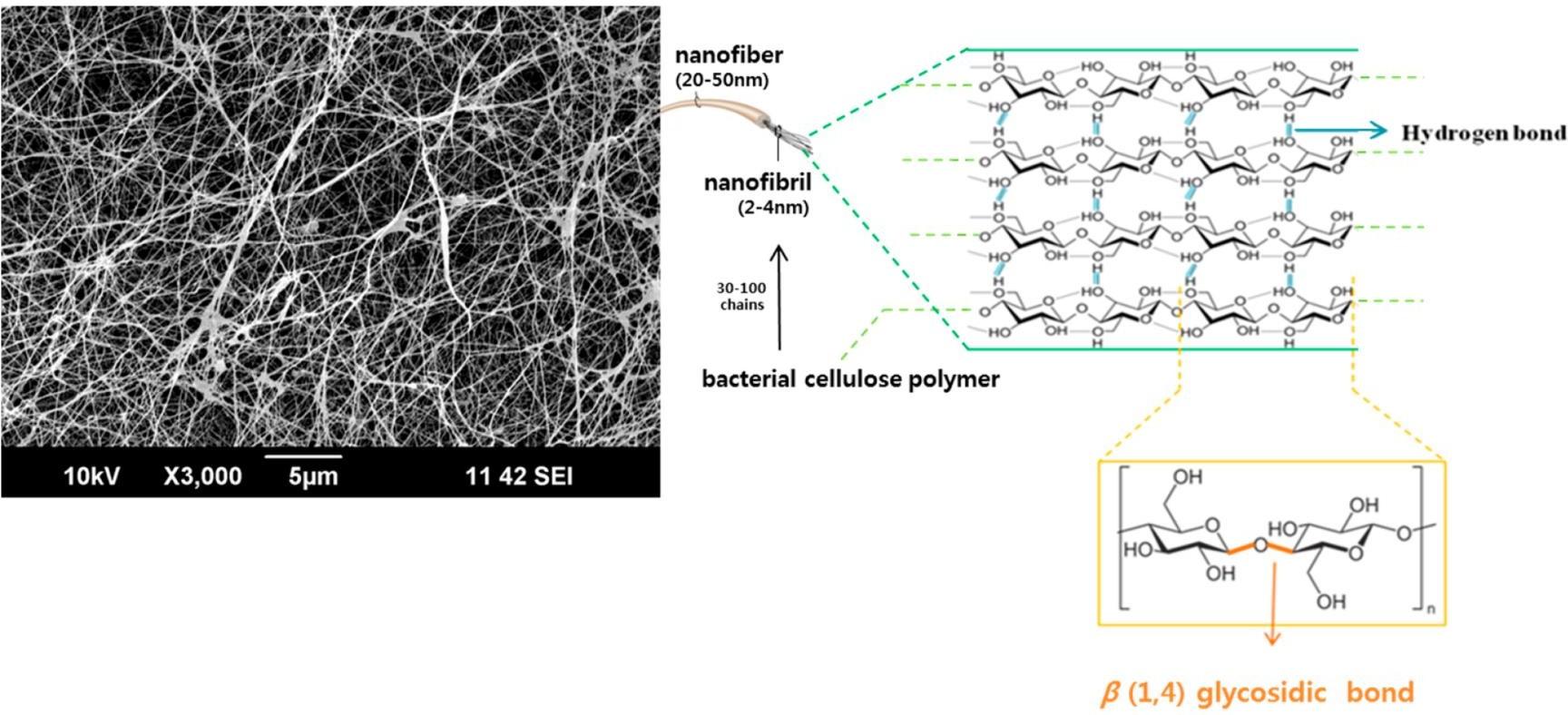
NatFibra® fiber is fermented from sugar sources and cellulose molecular chains are connected by glucose units via β-1,4 glycosidic bond and further assembled into nanofibrils structures.
high-aspect-ratio and adhesive surfaces of microfibrils allow them to form more contact points in aqueous case. Membrane time, membrane thickness, stripping or water washing performance and use of skin should be confirmed in the full form.
The certification status, appearance, activity content and other quality indicators are based on the latest product specifications and valid certificates.
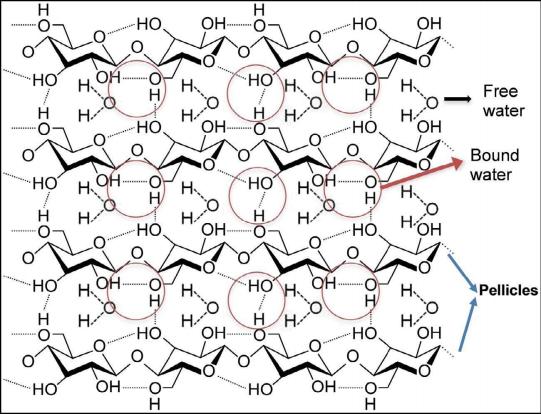
Hydroxyl radicals on the surface of the cellulose chain form hydrogen keys with water molecules. The pore between microfibrils and the continuous network together influence the distribution of water and decentralized components in the system.
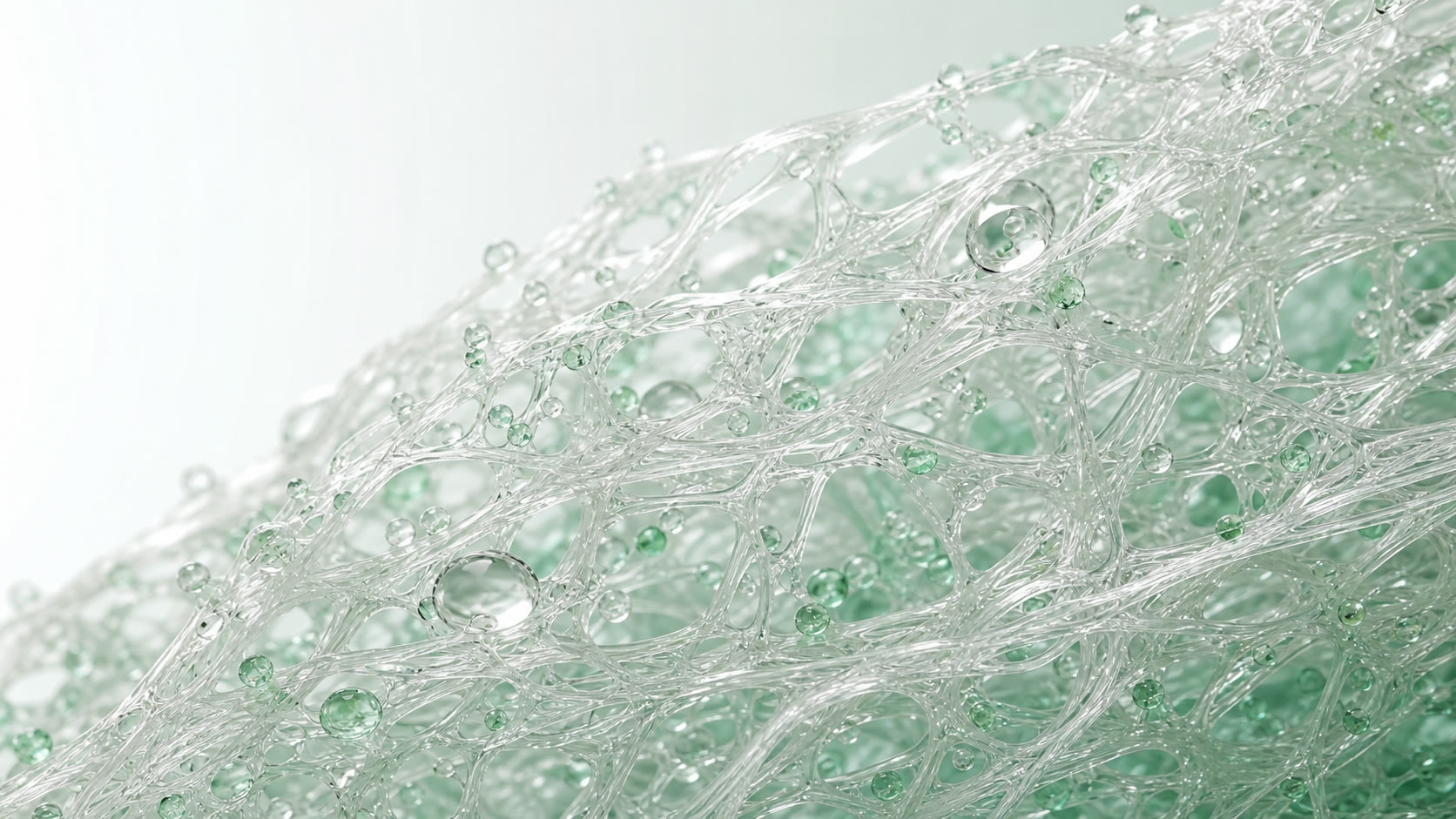
20-40 nm microfibrils are interwoven in aqueous case and participate in the formation of continuous membrane structures.
Fibrohydroxy, microfibrils pore and three-dimensional networks influence the distribution of water in combination with free water.
The network can limit the transport of fine particles or droplets in static condition, depending on the integrity of the formation.
Precision membrane fermentation can introduce functional components at the culture stage for the preparation of bio-cellulose film with a specific composition. The material composition, membrane thickness and reprocessing conditions are to be determined on the basis of the target formation and product form.
Sugar sources and germs enter the fermentation stage, forming the bio-cellulose.
Elimination of cultures and fermentation residues and acquisition of pure cellulose.
The material was assembled in accordance with the requirements of the application of the facial mask and the hydrogel membrane.
Complete formulation, quality confirmation and packaging.
Hydroxyl radicals on cellulose chains form hydrogen keys with water molecules. The pore between microfibrils and the three-dimensional network further limits the flow of water, so that the materials combine water with free water.
The above data correspond to the bio-cellulose material and the corresponding research conditions and are not equivalent to the wetting effect of NatFibra® MSK commercial mask finished products.
A microbial cellulose sticker carrying dioxypropanone was studied. The sticker is in contact with the skin for 30 minutes and records the colouring of the skin after 12 hours of the sticker, with the marking of DHA concentrations of 0%, 2%, 5%, 8% and 11%.
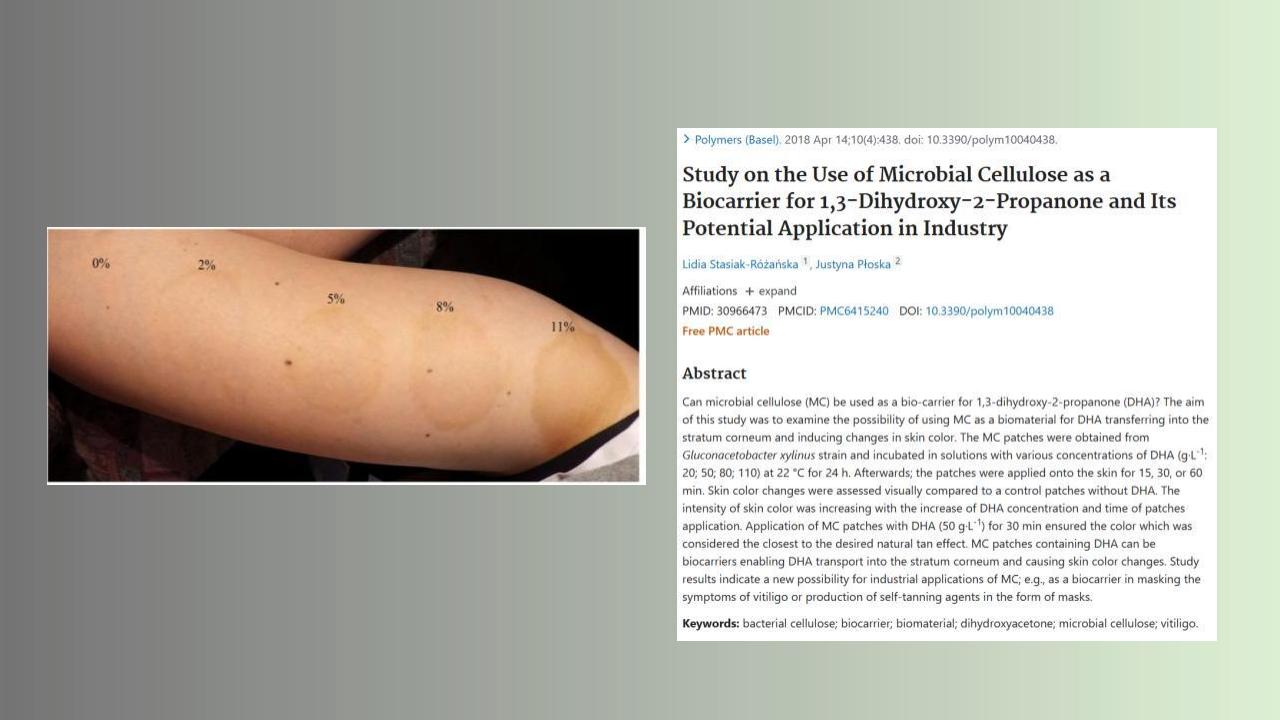
The study indicates that microbial cellulose can be a DHA contact carrier under the listed conditions and is not equivalent to the skin transfer conclusion of NatFibra® MSK finished products to other active organisms.
NatFibra® fiber of high-spect-rate-rate can be distributed over the oil-water area and, together with the three-dimensional network in aqueous case, limit the migration of oil droplets. This structure can be used in the Pickering emulsion system forformation studies.
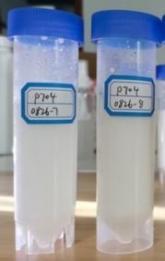
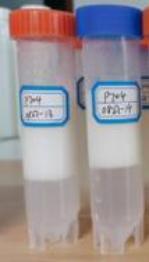
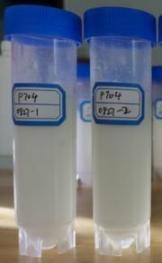
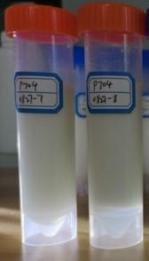
In this soybeans model system, samples with a content of more than 10% NatFibra were marked as stabilizing emulsion.
The sample group did not give the oil water ratio, the sampling process, storage temperature, observation time and evaluation methods. Figure concentrations apply only to this model system and do not act as recommended additions to NatFibra® MSK facial mask formulation.
NatFibra® fiber forms the main membrane structure. Cellulose gum, Plulando sugar or other assistive membrane components can be used to regulate membrane continuity, dry speed, softness and water washing.
The membrane thickness, continuity, resilience, strip strength and strip residue are recognized during development.
Be developed to confirm coating homogeneity, membrane state, water wash removal and post-use skin.
This time example does not list the composition of the formulation, the amount of coating, the thick film, the ambient temperature and the relative humidity. The drying time of the actual product should be recalculated in the prescribed quantity and in the use environment.
The following components are part of the application design, which does not represent ceramide, hyaluronic acid or phytoprotein contained in the INCI composition of the NatFibra® MSK product itself.
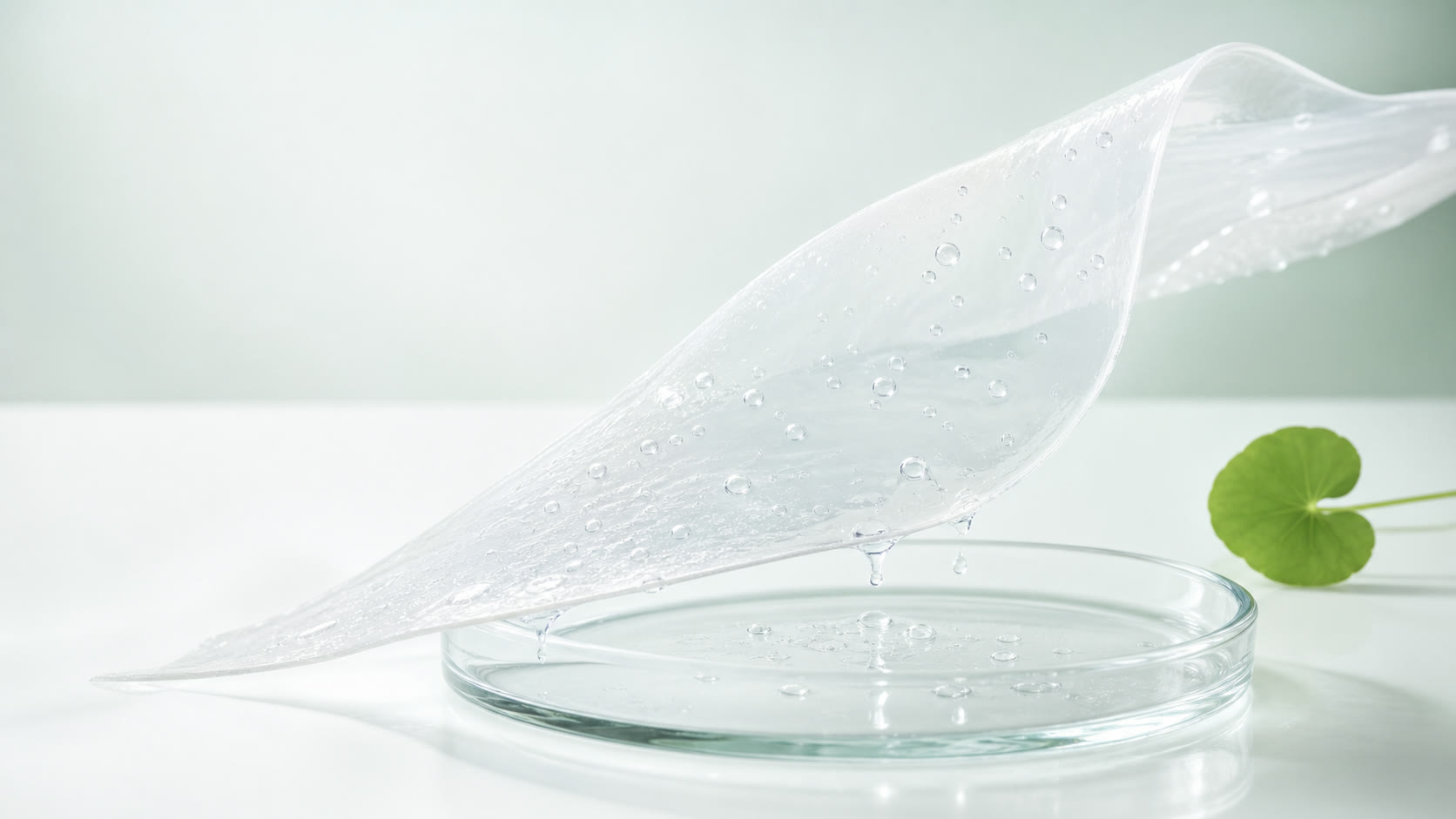
NatFibra® MSK builds a three-dimensional network of microfibrils and participates in membrane formation; hyaluronic acid is involved in water management forformulation; plant protein is used as skin decomposition.
The molecular weights, additions and compatibility of the components should be confirmed in the target description.
Specific additions should be determined on the basis of target film thickness, membrane timing, coating, stripping or water washing requirements and other membrane components. Prior to formal adoption, scope of application should be confirmed through additions to the gradients and process gradients.
The finished pH, viscosity, microbiological indicators, shelf life, recommended additions and standard additives process is based on the latest product specifications and technical information.