Surge product with bio-cellulose suspension stabilizer
NatFibra® SP / SP Plus
For shampoo, bathing and granular cleaning systems
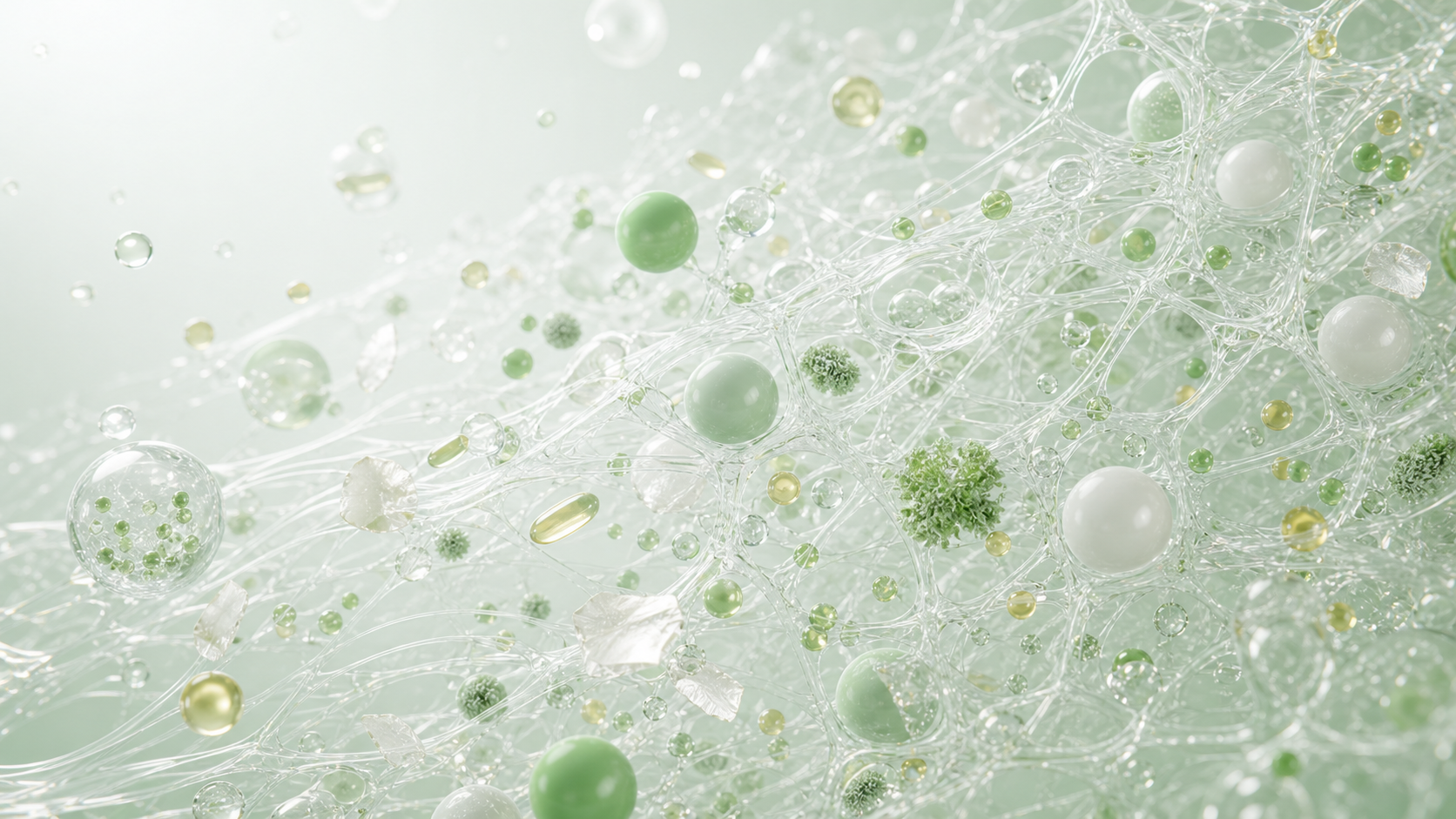
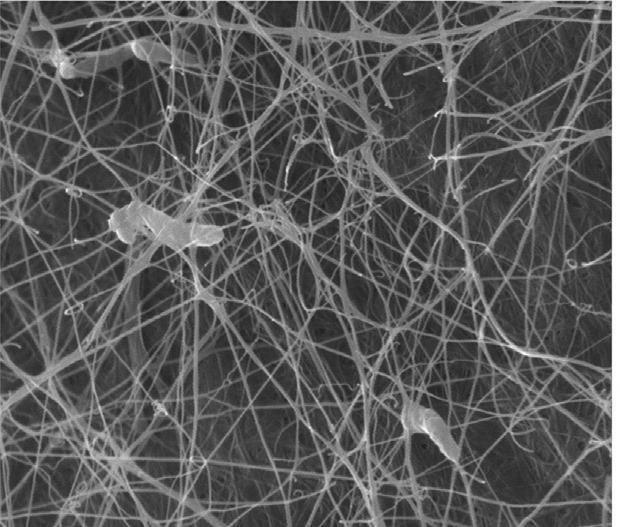
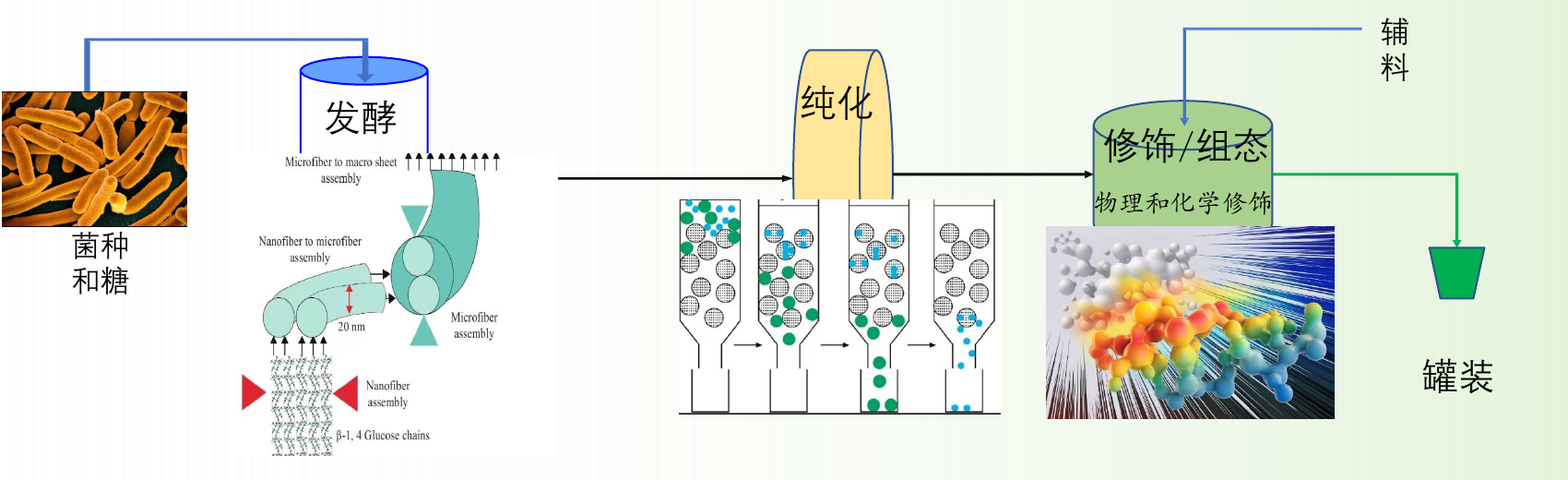
The source of fermentation, NatFibra® fiber, is interwoven after the aqueous case, forming a continuous three-dimensional network that provides structural support for beads, sand particles, dusting activity and other insoluble dispersions.
Structural basis
NatFibra® fiber
microfibrils diameter
About 20-40 nm
Selection
2.5%-5%
Tested System
SLES · ALS · CAPB · Taurate · APG
01Material structure
NatFibra® Fiber Structure
High-aspect-ratio fibers form a continuous network
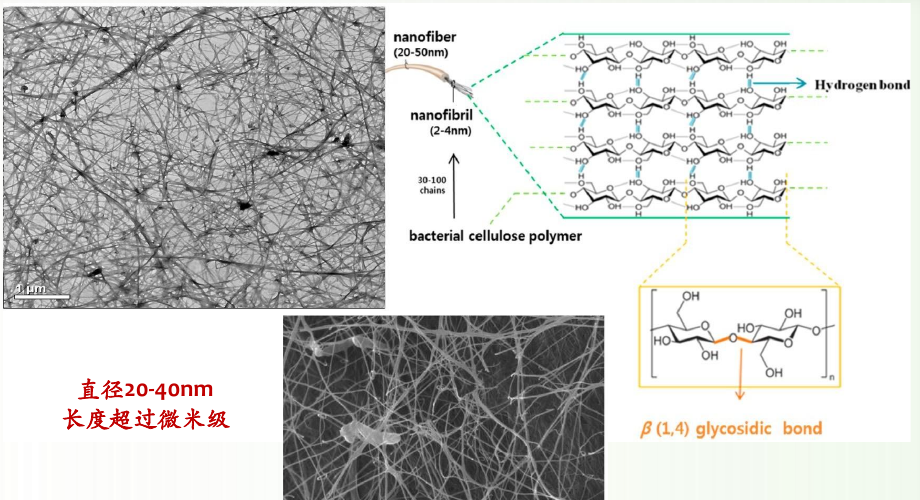
The cellulose is made of glucose monomer connections via β-1,4 glycosidic bond. NatFibra® SP uses NatFibra® fiber in diameter of approximately 20-40 nm, longer than micrometres.
The higher spect rateo and surface area connect fibres in liquids, forming an insoluble α-Link three-dimensional network.
α-Link 3D microfibrilProvide structural support for dispersing phases during static
The glucose chain is organized in stages into a nanofibrils and a microfibrils structure.High-aspect-ratio fibre interwoven into a continuous network
Fermentation, purification and product formation
Bio-cellulose from sugar fermentation
bio-cellulose has been purified and integrated into the product, and is fed in accordance with the dispersion of the system and the need for suspension.
02Suspended Authentication
Nironball suspended test
Yield stress indicates structural strength at rest
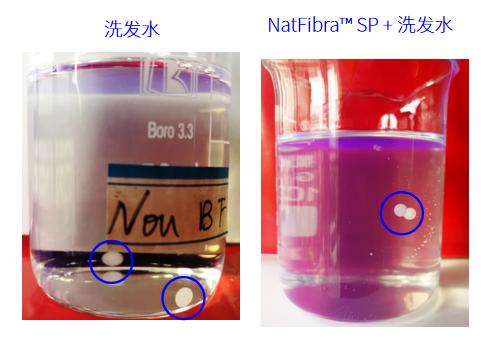
The test uses the nylon beads with a density of 1.13 g/ml and a diameter of 3.175 mm. The nylon beads sink rapidly in base shampoo; after joining NatFibra® SP, they remain scattered in the same system.
Basic shampoo: downfall of nylonsAdd NatFibra® SP: Nironball remains suspendedSame basic shampoo.Add Volume with yield condition
Nelon density
1.13 g/ml
nylon diameter
3.175 mm
Add Volume Range
0%-3.0%
I don't know.
33.56 → 94.785 dyn/cm²
Network structures are not the same as simply increasing overall viscosity. Formulation needs to be developed simultaneously to look at yield conditions, oscillation fluids, viscosity, particle specifications and high temperature storage.
03Reference
Particle Cleaning Reference
Two flowable cleansing systems
The following formulation records the conditions of application of NatFibra® SP in the specified washing system. Formination parameters and suspension results apply only to listed feedstocks, quantities used and test conditions.
EFN-66-10
COOL CEL Shampoo
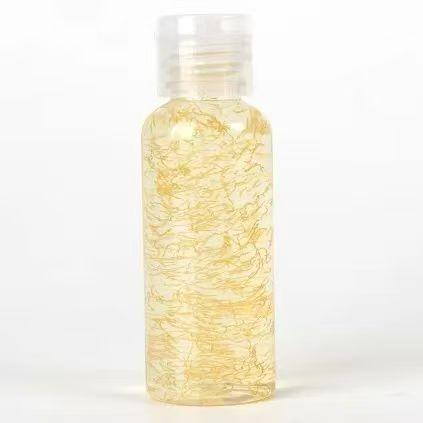
SLES, alkyl glucose and CAPB recompatibility systems, supporting jojoba particles with 3% NatFibra® SP.
Coconut-based sodium sulphate, sodium sodium sodium naphthalmide and alkyl sugar recombination systems supported by jojoba particles at 3% NatFibra® SP.
The test system uses SLES, ALS, CAPB and Taurate as a combination of total surface active agent content of 15.4%; the decomposition components include anion guarex, Polyquaternium-10, silicon oil emulsion and Polyquaternium-22.
Formulation and finished-product specifications
Add 5% of Benchmark A, 5% of NatFibra® SP, 0.3% of U20 to the control group, and set up the base.
View Full Test
Source or component
Benchmark A 5%
NatFibra® SP 5%
U20 0.3%
Foundation
To the ions.
46.24%
46.24%
50.94%
51.24%
Benchmark A
5.00%
-
-
-
NatFibra® SP
-
5.00%
-
-
U20
-
-
0.30%
-
EDTA-2Na
0.05%
0.05%
0.05%
0.05%
Sodium Laureth Sulfate(70% TS)
14.30%
14.30%
14.30%
14.30%
Ammonium Lauryl Sulfate(70% TS)
3.00%
3.00%
3.00%
3.00%
Sodium Methyl Cocoyl Taurate
1.00%
1.00%
1.00%
1.00%
Cocamidopropyl Betaine(35% TS)
6.70%
6.70%
6.70%
6.70%
Cetearyl Alcohol
0.30%
0.30%
0.30%
0.30%
Anion guarel (2% water solution)
10.00%
10.00%
10.00%
10.00%
Polyquaternium-10 (2% water solution)
7.50%
7.50%
7.50%
7.50%
Zinc Pyrithione(50% TS)
2.00%
2.00%
2.00%
2.00%
Large grain silicon oil emulsion (65% TS)
1.00%
1.00%
1.00%
1.00%
Small silica emulsion (60% TS)
1.00%
1.00%
1.00%
1.00%
Polyquaternium-22(40% TS)
0.50%
0.50%
0.50%
0.50%
Phenoxyethanol (and) Ethylhexylglycerin
0.60%
0.60%
0.60%
0.60%
Sodium Chloride
0.81%
0.81%
0.36%
1.03%
Indicators of finished products
Benchmark A 5%
NatFibra® SP 5%
U20 0.3%
Foundation
pH
5.70
5.15
5.48
5.38
viscosity (mPa.s, RV, 20 rpm)
11,260
11,900
6,440
9,300
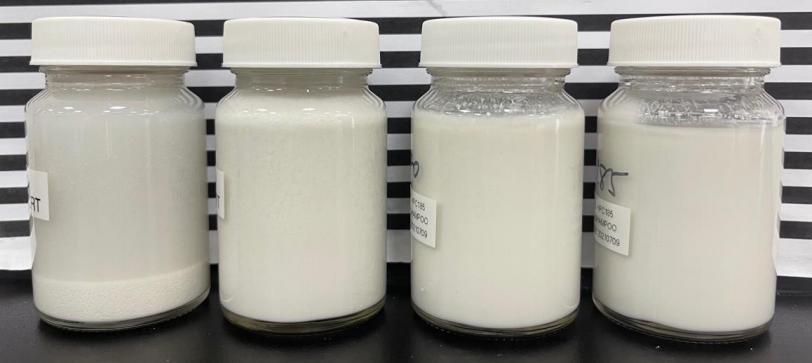
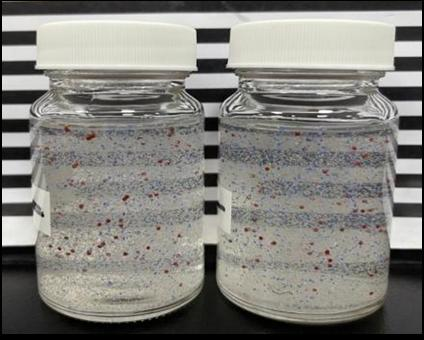
From left to right: Foundation, U20, Benchmark A, NatFibra® SP
50 °C / 2 weeks
Storage stability
There was a clear separation of the base; 5 per cent of NatFibra® SP and 5 per cent of Benchmark A samples did not show a significant separation and a small accumulation of zinc pyrithione was observed.
Sample
Storage status
Foundation
Clear separation.
U20(0.3%)
Small separation
Benchmark A(5%)
No visible separation, small zinc pyrithione Party
NatFibra® SP(5%)
No visible separation, small zinc pyrithione Party
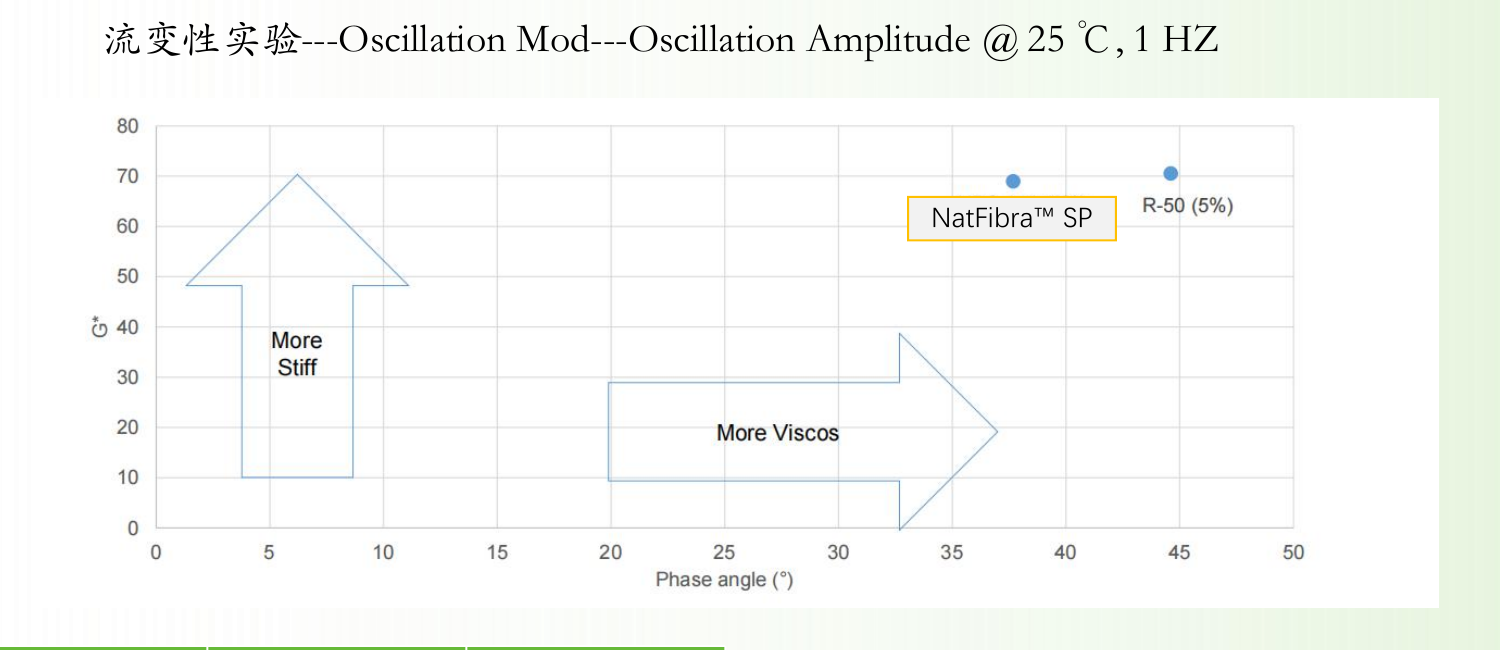
The oscillation flows.
25 ℃,1 Hz
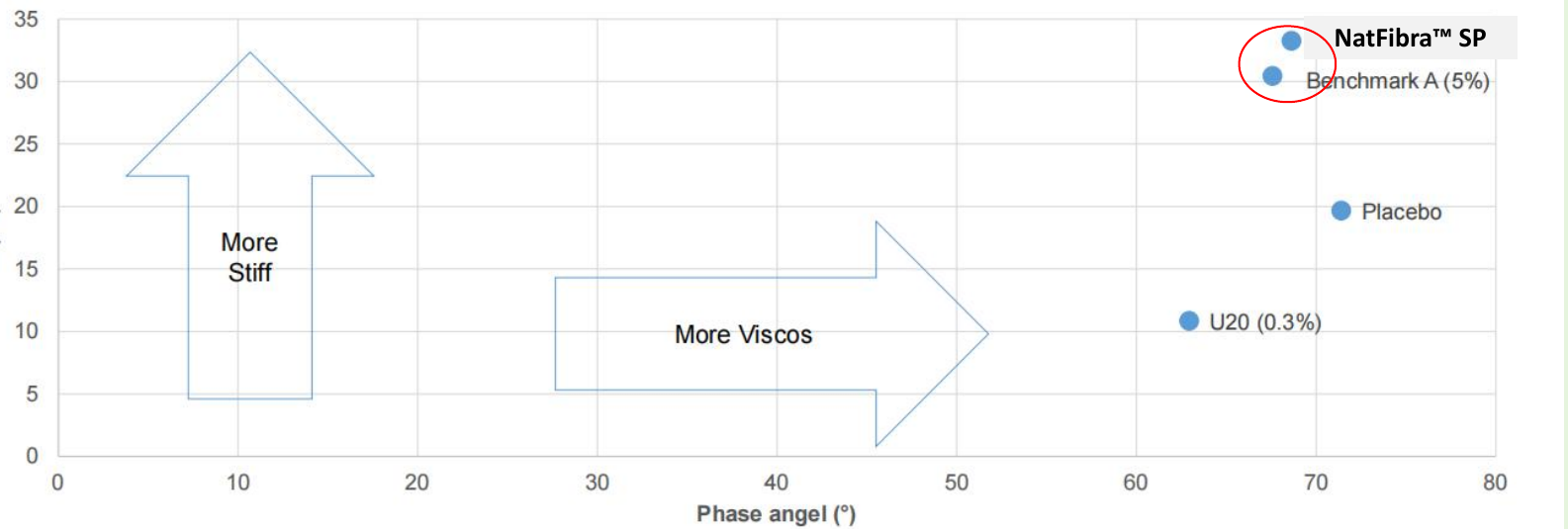
Complex modulus G* for NatFibra® SP samples was 33.2343 Pa, plus 68.6479°; two parameters are close to 5% Benchmark A samples.
Sample
G*(Pa)
I don't know.
Foundation
19.6536
71.4160°
Benchmark A(5%)
30.4240
67.5879°
NatFibra® SP(5%)
33.2343
68.6479°
U20(0.3%)
10.8188
62.9465°
Dynamic Combination
Foaming, rinsing, wet-combing and dry-combing stages
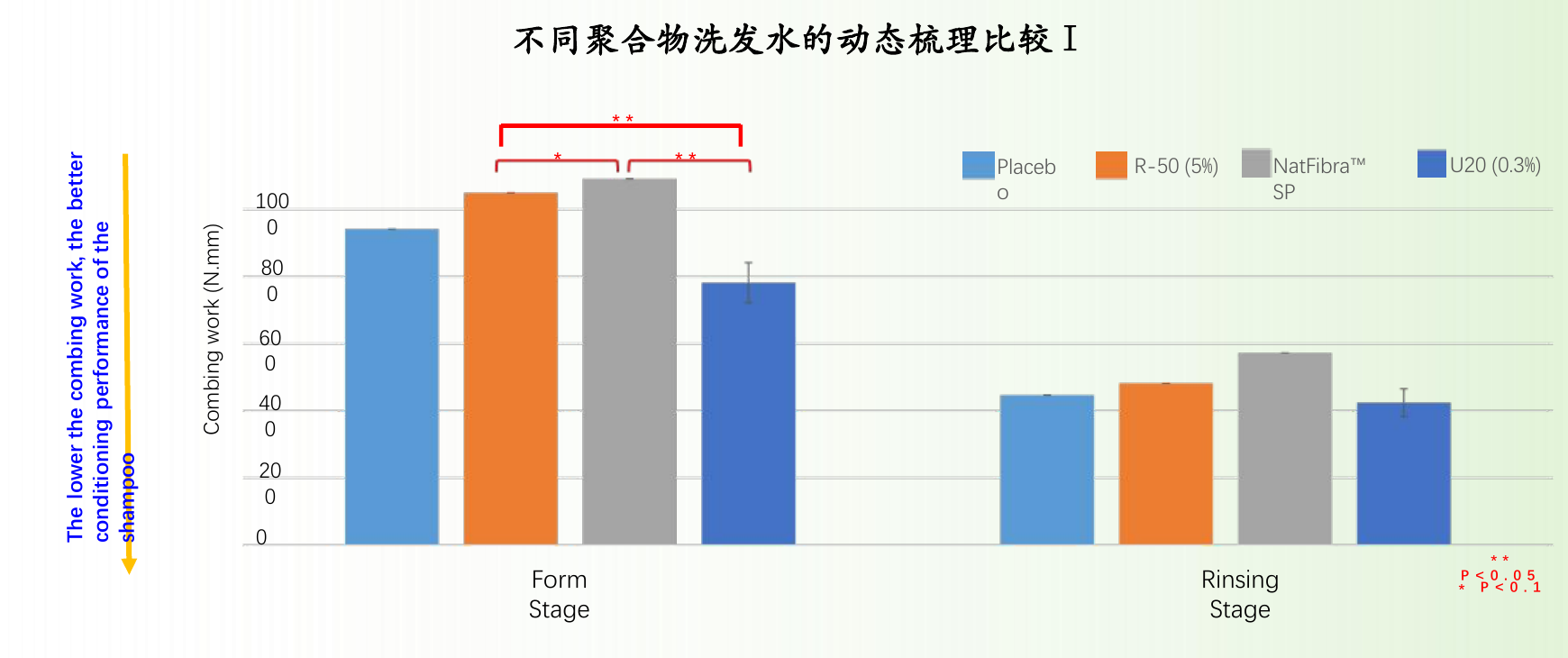
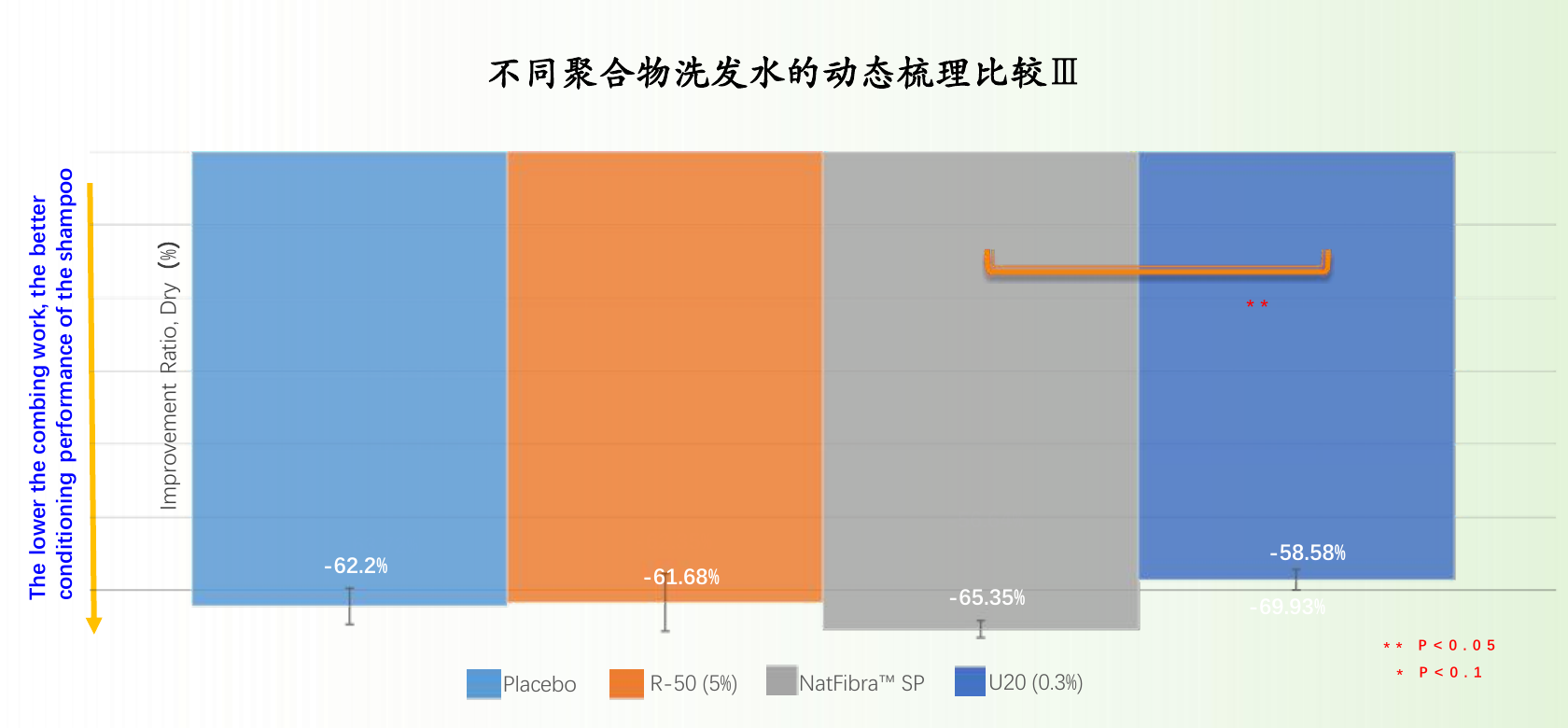
Lower combing means lower combing resistance. Combination is determined by a combination of surfactants, anion polymers, silicon oils and other adjustments.
01Foam and bleaching phase
In the foam phase, 5% of Benchmark A samples were combed with less than 5% NatFibra® SP; during the bleaching phase, no significant differences were observed between the samples.
02Wetting phase
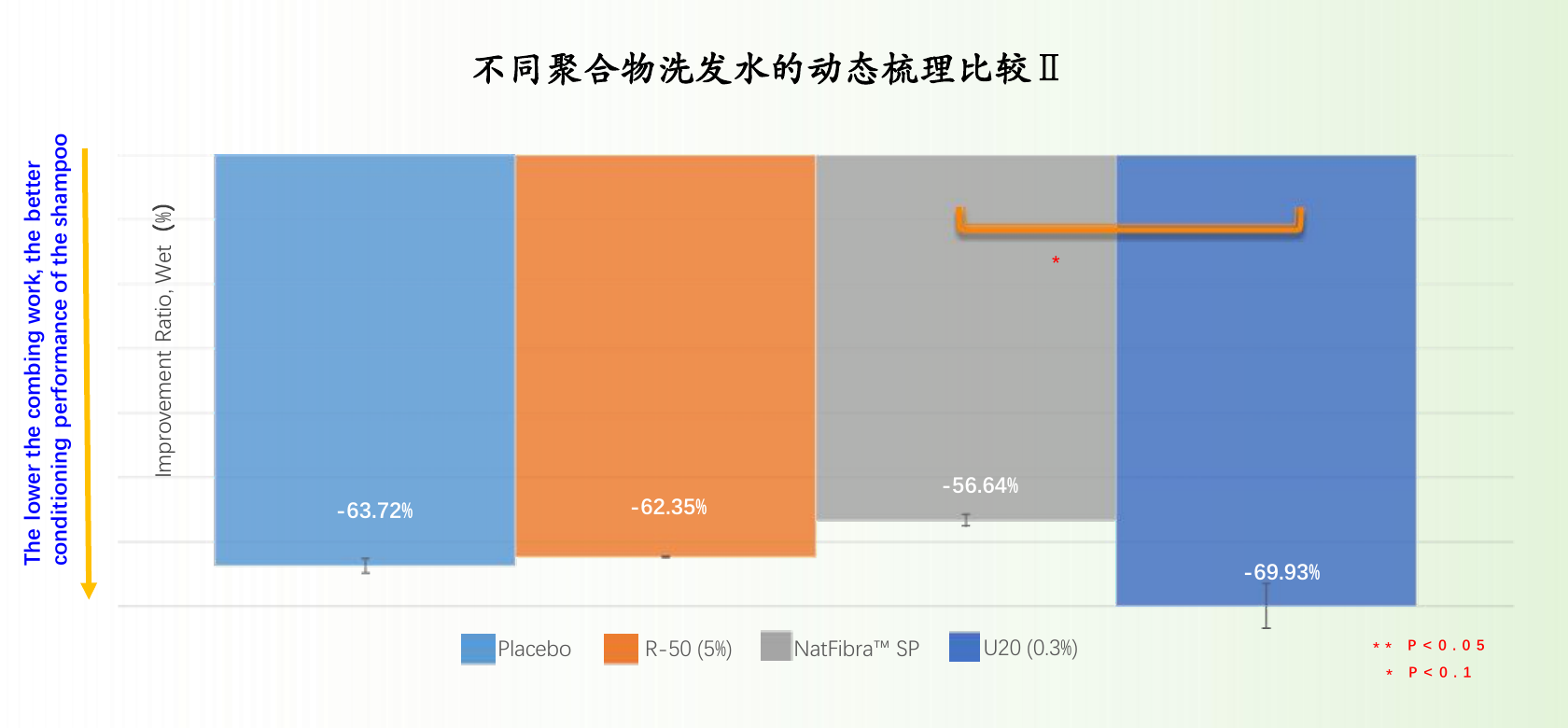
The rate of change in combustration is as follows: basic formulation - 63.72 per cent, Benchmark A - 62.35 per cent, NatFibra® SP - 56.64 per cent and U20-69.93 per cent.
03Dry-up phase
The rate of change in condensing is as follows: basic-formulation-62.20 per cent, Benchmark A-61.68 per cent, NatFibra® SP-65.35 per cent, U20-58.58 per cent.
05Baptization application validation
Two types of surfactant system
Compare rheology and particle-suspension limits
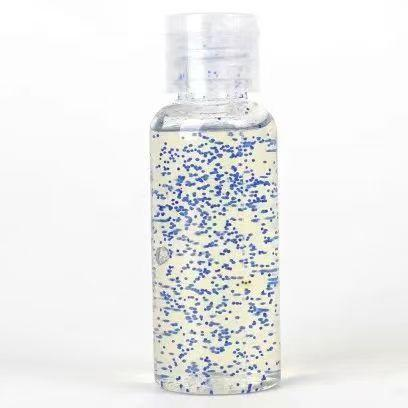
The two ablution systems use different combinations of surfactants, compared with Benchmark A, which are relatively sticky, oscillating, oscillating fluids and high temperature suspensions of different particle particles.
System I
SLES / CAPB System
SLES: CAPB = 9 : 3, 12% of total surfactant content supported by sodium chloride.
4% NatFibra® SP
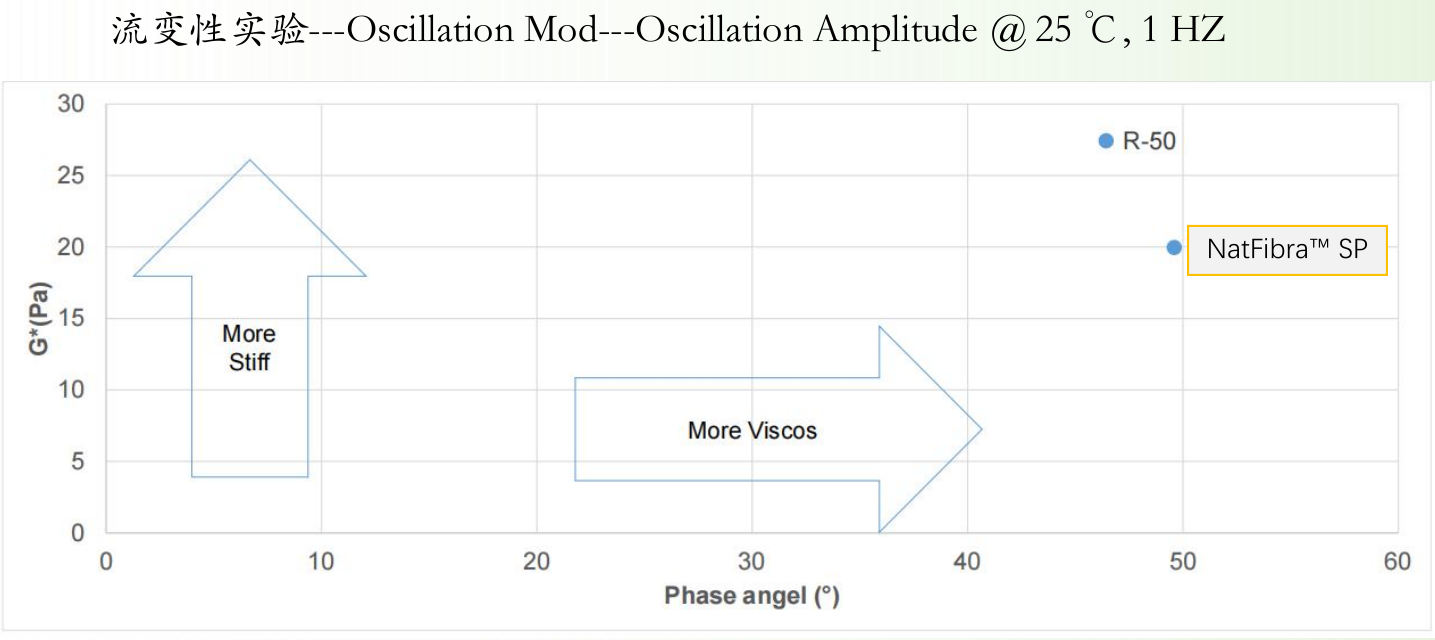
Benchmark A and NatFibra® SP particle suspended samplesoscillation currents: 25 °C, 1 Hz
Indicators of finished products
Test Project
Benchmark A
NatFibra® SP
pH
5.07
5.13
viscosity (mPa.s, RV, 20 rpm)
8,620
8,340
Radius (NTU)
56.93
23.83
G*(Pa)
27.4203
19.9513
I don't know.
46.4291°
49.5946°
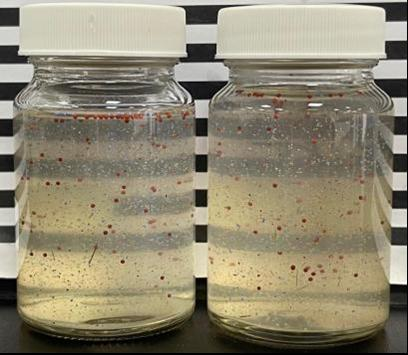
50 °C particle suspension result
Suspended particles
Benchmark A
NatFibra® SP
Big lump.
50 °C 2 days not passed
50 °C 2 days not passed
Medium particle
50 °C 2 week pass
50 °C 2 week pass
Small plume.
50 °C 2 week pass
50 °C 2 week pass
View System I It's not like it's the only thing that's going on.
Source or component
Benchmark A Group
NatFibra® SP Group
Benchmark A
4.00%
-
NatFibra® SP
-
4.00%
Sodium Laureth Sulfate(25% TS)
36.00%
36.00%
Cocamidopropyl Betaine(35%)
8.57%
8.57%
Sodium Benzoate
0.50%
0.50%
Sodium Chloride
1.34%
1.34%
Citric Acid(40%)
0.14%
0.04%
System II
SLES / APG / CAPB System
SLES: APG: CAPB = 5: 1.3, total surfactant at 10.3%, with sodium chloride.
5% NatFibra® SP
Benchmark A and NatFibra® SP particle suspended samplesoscillation currents: 25 °C, 1 Hz
Indicators of finished products
Test Project
Benchmark A
NatFibra® SP
pH
4.89
4.83
viscosity (mPa.s, RV, 20 rpm)
11,250
10,650
Radius (NTU)
64.96
64.81
G*(Pa)
70.5618
68.9807
I don't know.
44.6002°
37.6770°
50 °C particle suspension result
Suspended particles
Benchmark A
NatFibra® SP
Big lump.
50 °C 2 Week Not Passed
50 °C 2 Week Not Passed
Medium particle
50 °C 1 month failed
50 °C 1 month failed
Small plume.
50 °C 1 month pass
50 °C 1 month pass
Small sand particles
50 °C 1 month pass
50 °C 1 month pass
View System II It's not like it's the only thing that's going on.
Source or component
Benchmark A Group
NatFibra® SP Group
To the ions.
68.67%
68.67%
Benchmark A
5.00%
-
NatFibra® SP
-
5.00%
Sodium Laureth Sulfate (68.1% active)
7.34%
7.34%
Coco-Glucoside(52%)
1.92%
1.92%
Cocamidopropyl Betaine(35%)
14.29%
14.29%
Starch Hydroxypropyltrimonium Chloride
1.00%
1.00%
Sodium Benzoate
0.50%
0.50%
Glycerin
0.50%
0.50%
Sodium Chloride
0.45%
0.45%
Citric Acid(50%)
0.33%
0.33%
The particle size is a key variable for suspended stability. Small, medium and fine grains of sand can be tested for storage at the corresponding high temperature; large particles are not passed under current conditions of formulation and need to be re-validated after adjusting the amount of suspended stabilizers, structure or particle specifications.