NatFibra® Ecobel Plus
For low sticky emulsion, fine milk and sprayable aerosol systems. In development, emphasis is placed on the determination of the effective solid content, vent suitability and electrolyte content.
Emulsion... emulsion...
Ecobel Plus / Ecobel HV
It is based on sugar fermentation and applies to emulsion, cream, fine and sprayable emulsion. High-aspect-ratio fibres are interwoven in aqueous case, providing structural support for emulsion droplets.
Ecobel Plus and Ecobel HV are added in different proportions. Formulation shall be calculated on the basis of the type used and the active solid content of the product in the current batch.
For low sticky emulsion, fine milk and sprayable aerosol systems. In development, emphasis is placed on the determination of the effective solid content, vent suitability and electrolyte content.
Emulsion... emulsion...For high viscosity emulsion, structures can be constructed in conjunction with multiple sugars, such as lusocolytes, or natural glues.
The cream, the milk, the structural emulsion.The unit consists of glucose units connected to β-1,4 glycosidic bond. Fibres have a diameter of about 20-40 nm and lengths above the μm scale, with high-aspect-ratio fibre interwoven in aqueous case.
The network can increase the structural intensity of successive emulsion, limiting the movement and concentration of oil droplets. Actual performance is influenced by product usage, pH, electrolyte, oil case composition and dairy processes.

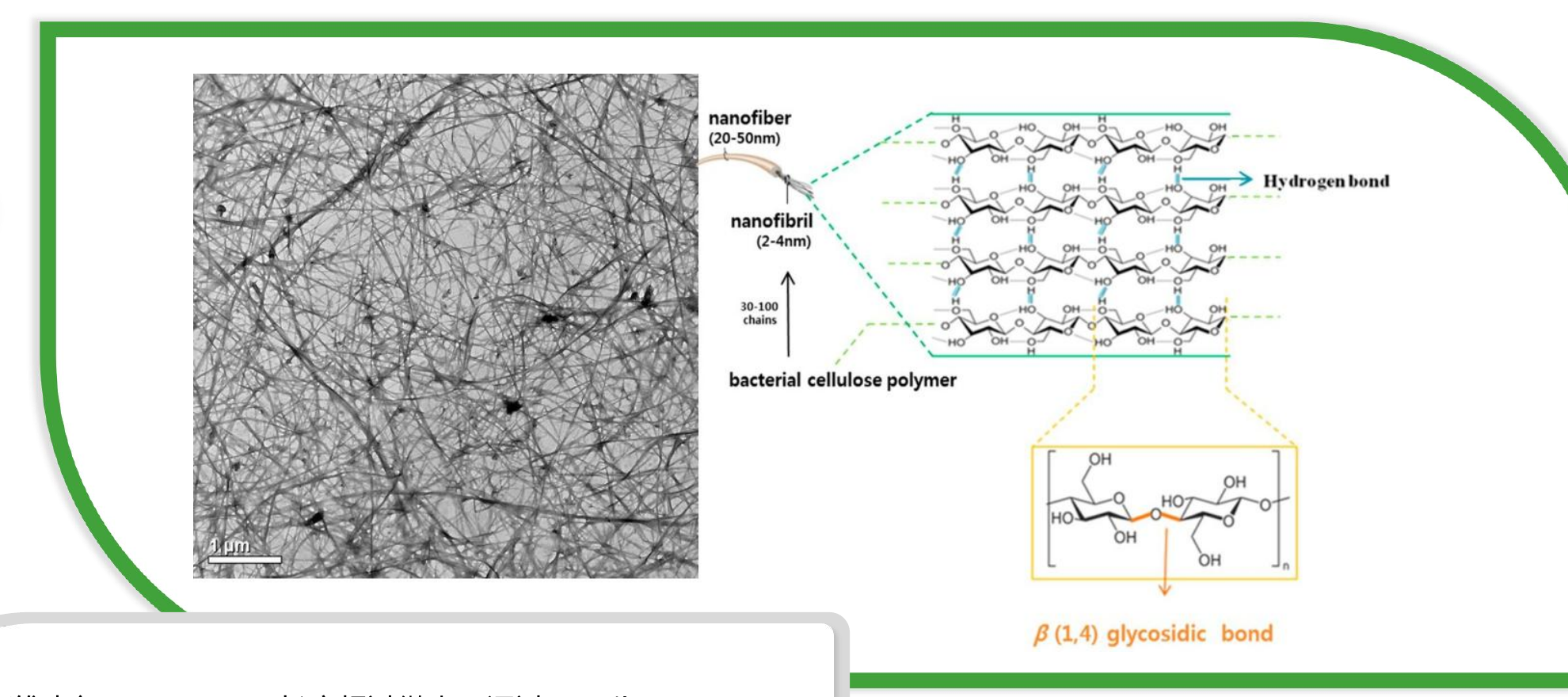
Ecobel Plus uses the same base as the HEC control sample (NatrosolTM/EC). Centrifugal conditions are 3000 rpm, 30 min; concentration and saline testing systems pH is 6. The results correspond only to the list of conditions for the validation and testing.
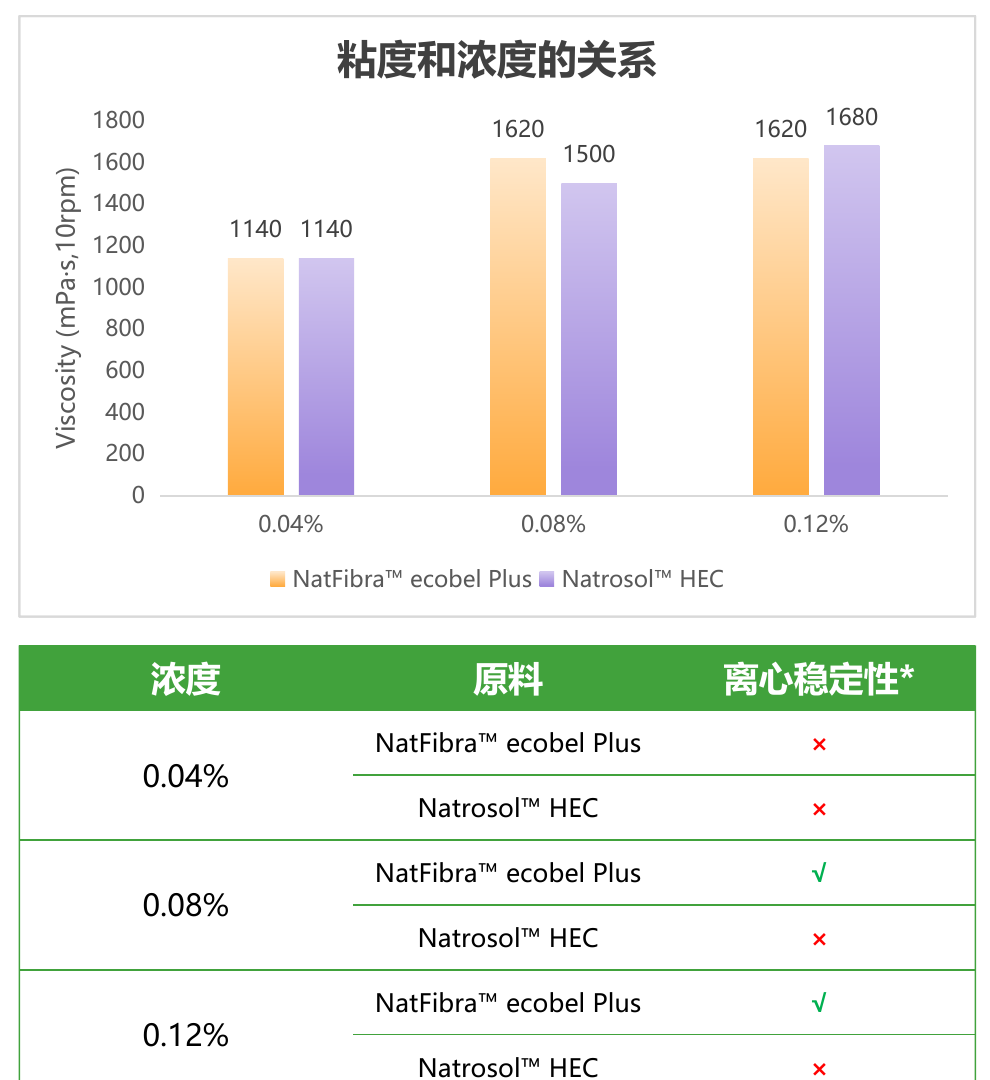
Ecobel Plus passes the centrifuge test at 0.08% and 0.12% of the active solid content and does not pass at 0.04%. 0.12% The spray performance of the samples has decreased and the final usage still needs to be determined in conjunction with the target packaging and shelf stability.
| Conditions | Ecobel Plus Sticky | Centrifugal Results | HEC viscosity | Centrifugal Results |
|---|---|---|---|---|
| 0.04% | 1140 mPa·s | Not adopted | 1140 mPa·s | Not adopted |
| 0.08% | 1620 mPa·s | Pass. | 1500 mPa·s | Not adopted |
| 0.12% | 1620 mPa·s | Pass. | 1680 mPa·s | Not adopted |
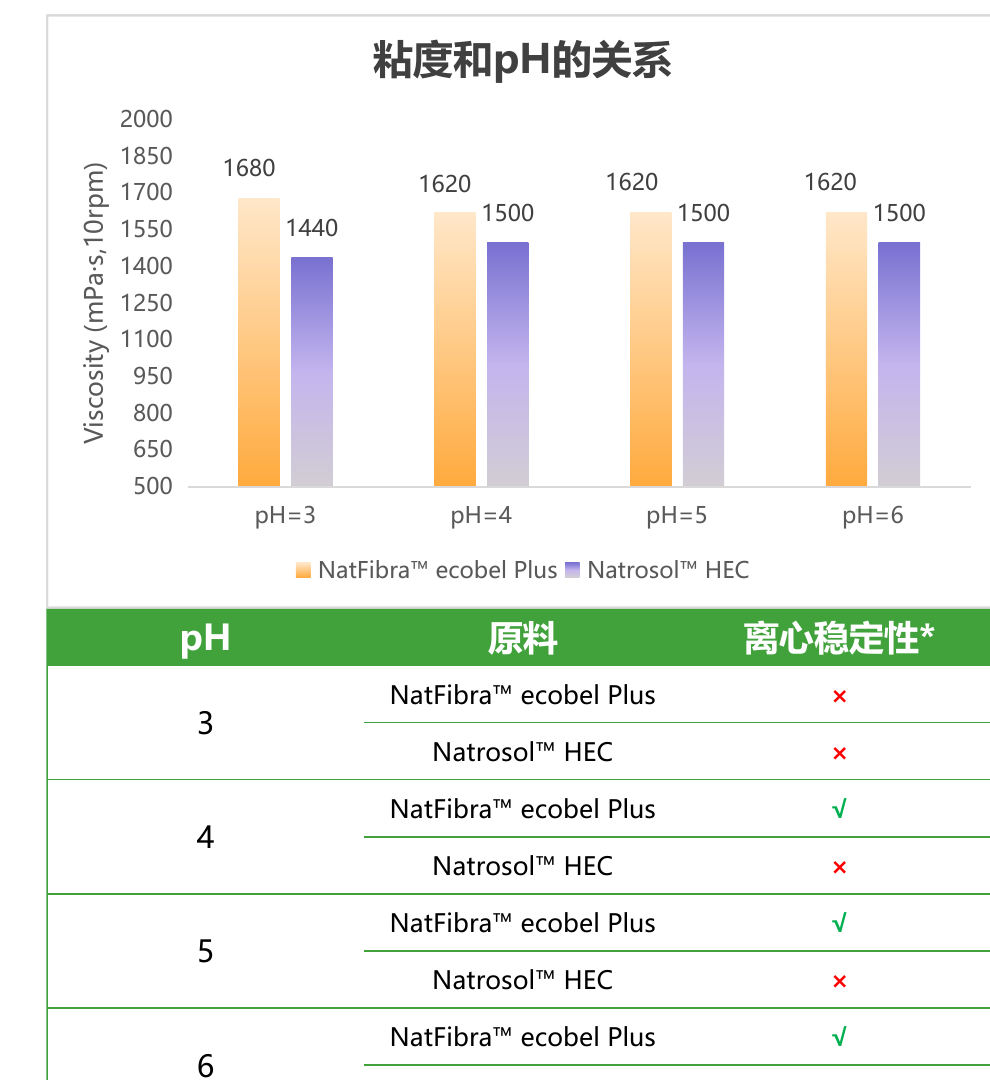
The test uses 0.08% effective solid content. Ecobel Plus passes the centrifugal test at pH 4-6 and shows a layer at pH 3. The viscosity change is not entirely consistent with centrifugal stability, and the target is subject to actual pH review.
| Conditions | Ecobel Plus Sticky | Centrifugal Results | HEC viscosity | Centrifugal Results |
|---|---|---|---|---|
| pH 3 | 1680 mPa·s | Not adopted | 1440 mPa·s | Not adopted |
| pH 4 | 1620 mPa·s | Pass. | 1500 mPa·s | Not adopted |
| pH 5 | 1620 mPa·s | Pass. | 1500 mPa·s | Not adopted |
| pH 6 | 1620 mPa·s | Pass. | 1500 mPa·s | Not adopted |
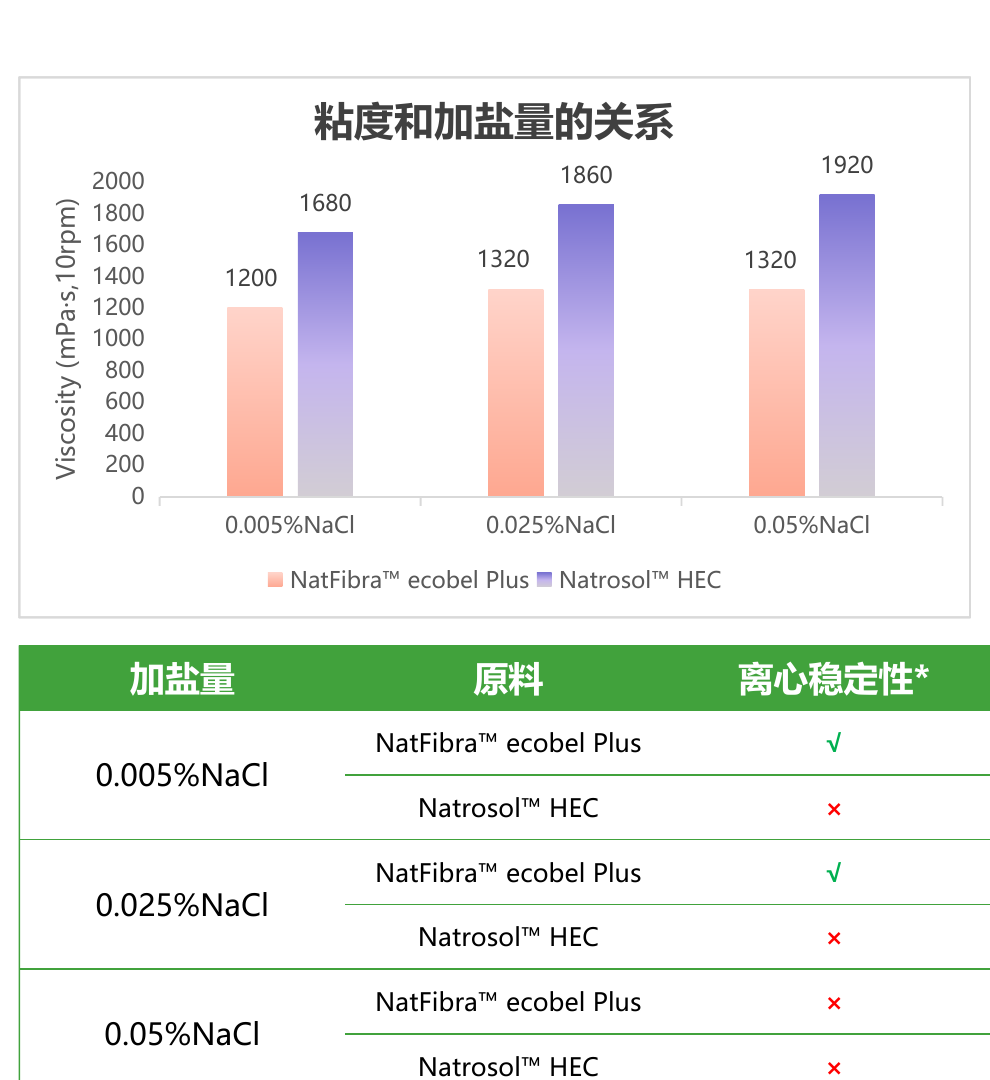
The test uses 0.08% effective solid content, and the system pH is 6. Ecobel Plus passes the centrifuge test at 0.005% and 0.025% NaCl and does not pass at 0.05% NaCl. Saltination shall be re-tested with actual ion composition.
| Conditions | Ecobel Plus Sticky | Centrifugal Results | HEC viscosity | Centrifugal Results |
|---|---|---|---|---|
| 0.005% | 1200 mPa·s | Pass. | 1680 mPa·s | Not adopted |
| 0.025% | 1320 mPa·s | Pass. | 1860 mPa·s | Not adopted |
| 0.05% | 1320 mPa·s | Not adopted | 1920 mPa·s | Not adopted |
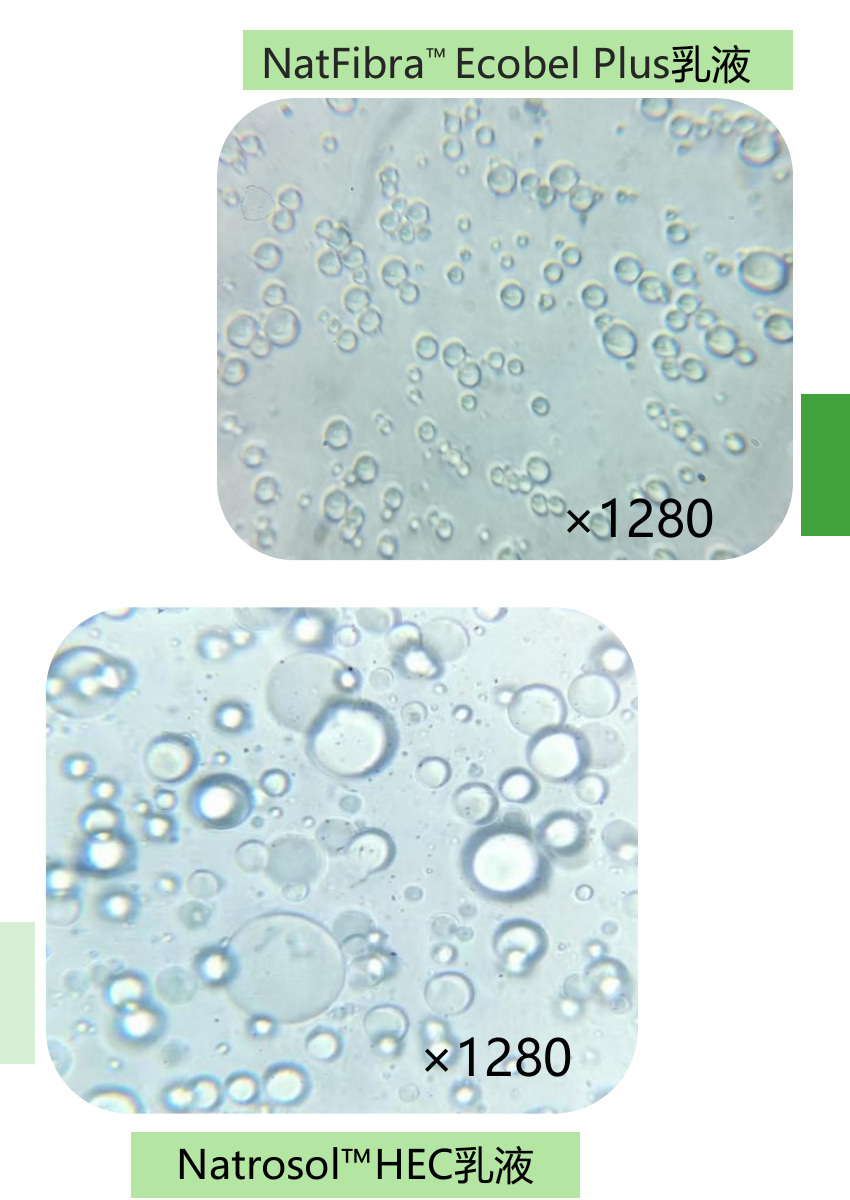
Observation uses 0.08% Ecobel Plus emulsion versus HEC against emulsion. Microconditions are 16x, magnifier 2x, mirror 40x.
Under this condition and observation, the boundaries of the oil droplets in the Ecobel Plus sample are clearer, and the concentration, integration and irregular concentration of the droplets is less than the HEC control samples.
Two models correspond to different fluid targets. The following data only apply to re-validation in the event of changes in the reference, case, glue or process conditions listed.
Reference to emulsion pH 6 and stickiness 1620 mPa.s (10 rpm) can be sprayed by spray pumps. The finished product should be tested for matching with the target package.
| Group | Dosage |
|---|---|
| NatFibra® Ecobel Plus | 9% |
| GTCC | 10% |
| Glycerine. | Appropriate |
| I don't know. | Appropriate |
| 1,2-ediol | Appropriate |
| Water | Completing to 100% |
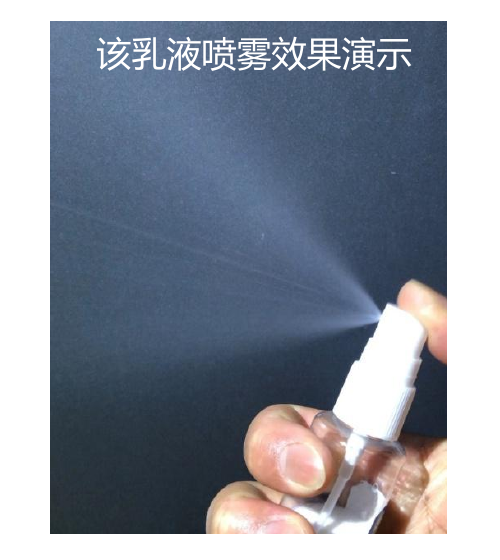
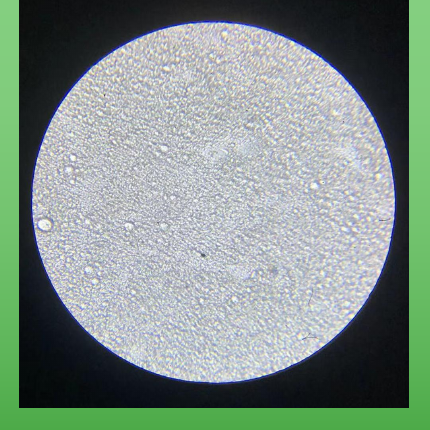
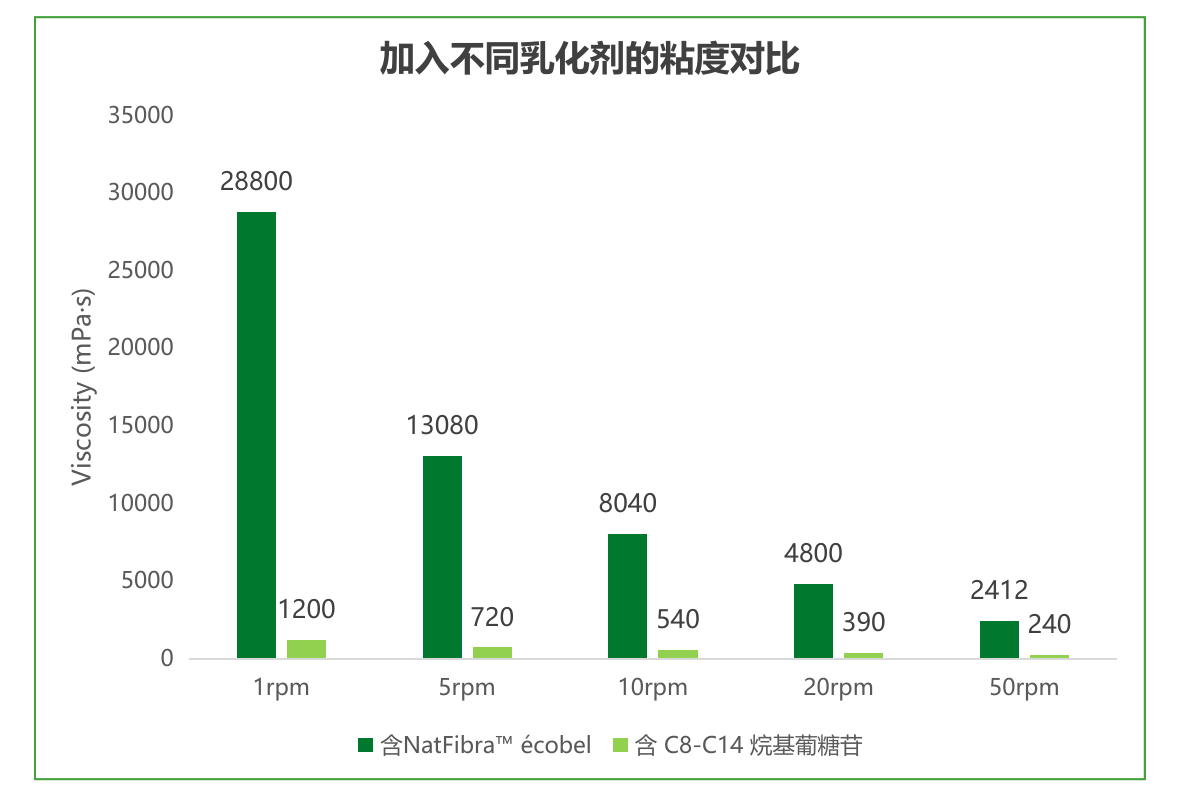
Reference is made to the 9% Ecobel HV and 0.5% of the Glucose construction system, compared to the 1% C8-C14 alkyl glucose control system. Both groups of samples showed a decrease in their apparent viscosity as the speed of the tests increased.
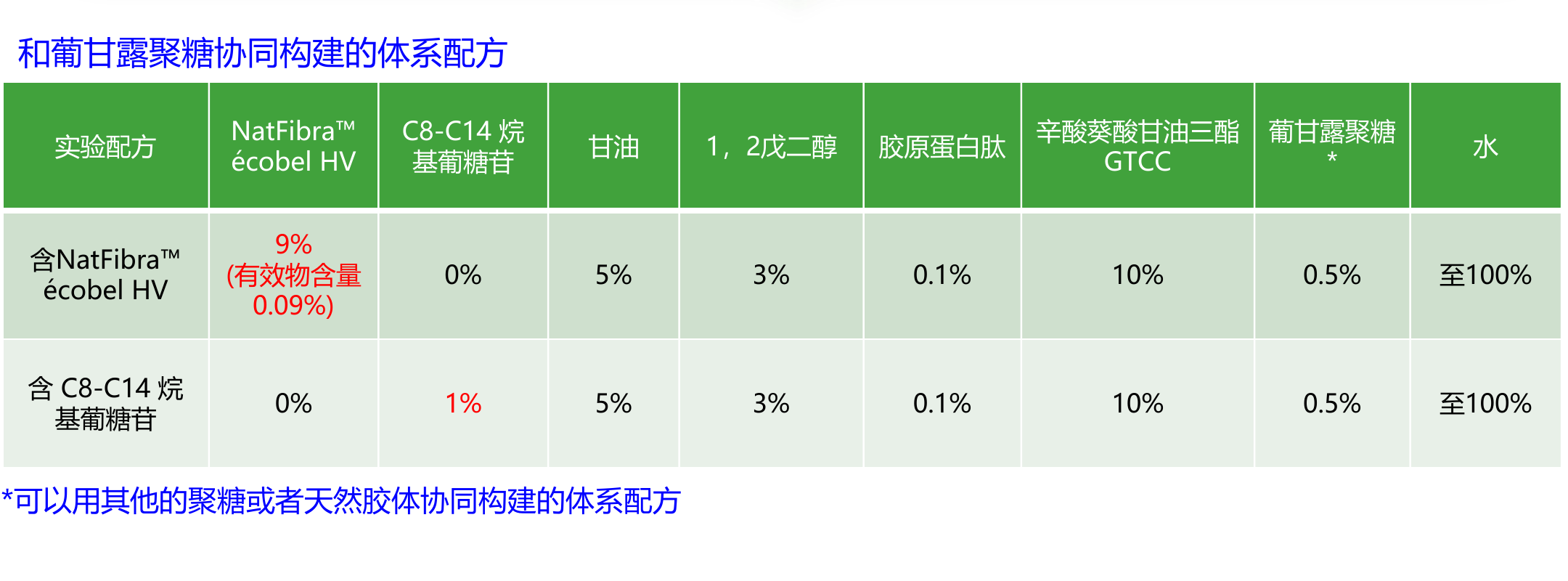
| Group | Ecobel HV System | Control System |
|---|---|---|
| NatFibra® Ecobel HV | 9% (active solid content 0.09%) | 0% |
| C8-C14 alkyl glucose | 0% | 1% |
| Glycerine. | 5% | 5% |
| 1,2-ediol | 3% | 3% |
| Glycerin. | 0.1% | 0.1% |
| GTCC | 10% | 10% |
| Luso-ganda. | 0.5% | 0.5% |
| Water | Completing to 100% | Completing to 100% |
| Turn! | Ecobel HV | Control System |
|---|---|---|
| 1 rpm | 28800 mPa·s | 1200 mPa·s |
| 5 rpm | 13080 mPa·s | 720 mPa·s |
| 10 rpm | 8040 mPa·s | 540 mPa·s |
| 20 rpm | 4800 mPa·s | 390 mPa·s |
| 50 rpm | 2412 mPa·s | 240 mPa·s |
The above data only apply to this group forification and test conditions. Luso-gang polymalgamour can be replaced with other sugar or natural glues according to target formulation, and the degree of viscosity, flow and stability can be reconfirmed.
3000 rpm mean 3-10 min, until the slurry is 100% transparent and non-physically visible particles.
Add the rest of the aqueous pase group to dispersed cellulose gel, which is continuously broken to even.
Low-speed stirs slowly add an oil case to 5,000 rpm mean 3-5 min.
Oil case and aqueous case maintain 70-75°C and mix cooling after high-speed parity.
Cool to 35-40°C, add thermal sensitivity and regulate pH.
Low viscosity emulsion uses 0.08-0.10% effective solid content as the initial screening range. Reference 9% (0.09% solid content) of the reference is an example of product addition, which should be converted according to the model used and the active solid content of the current product.
It can be shared with skin protection groups such as ceramide and mason oil. Avoiding direct mixing with stronger oxidation components.
From Ecobel Plus and Ecobel HV continue in the direction of baptism, hair care, facial mask, oral care and biological materials.